Site map
Turismo Binacional Peru Ecuador
www.saexplorers.org/ South American Explorers in Quito, Lima, Cuzco & Buenos Aires.
Hostal Posada del Maple · Quito · Ecuador ...
Juan Rodríguez E8-49 y 6 de Diciembre Phone: +593 2 2544-507 / 2237-375
La Mariscal · Quito · Ecuador. Deutsch · English · Español · Français ...
www.posadadelmaple.com/ - 9k - En caché - Páginas similares
The Secret Garden Quito,colonial hostal in old town Quito, ...
- The Secret Garden, Quito, Ecuador. Calle Antepara E4-60 y Los
Rios, Sector San Blas, Quito, Ecuador.
Qhapaq Nan / Inka Highway network www.cosmovisionandina.org/archivos/resultados_qn.html?cx=011703027955821980617%3Aoqhmco_ph1y&cof=FORID%3A9&ie=UTF-8&q=qhapaq+nan&siteurl=www.cosmovisionandina.org%2Farchivos%2F#943.
World Heritage List includes red dates below
.
1978, 2001 Galápagos Islands
Galapagos Penguin Report October 2002 arrivals in Chan Chan included Humboldt penguins:
1978 City of Quito
Baños
1983 Sangay National Park
Cuenca
1999 Historic Centre of Santa Ana de los Ríos de Cuenca
Loja
Vilcabamba accommodation hiddengarden@LatinMail.com
Rio Yambala includes map from Vilcabamba to Chachapoyas and Trujillo
.
 PERU
PERU
Click on map to enlarge it.
www.turismoruralperu.gob.pe/facipub/upload/publicaciones/1/134/img/mapa3costans.jpg
Instituto Geografico Nacional www.ign.gob.pe/esp/catalogo/index.html
Page 13 of product catalogue 'Mapa vial' shows road, rail & river routes.
MAP OF INCA HIGHWAY IN PERU
www.caminataporlapaz.org.pe/caminatas/mapa.html
.
Tumbes, Piura & North Peru beaches
.
BirdLife International:
www.birdlife.org/downloads/america/files/Flder_Tumbes_Darwin_Spv4.pdf
.
.
California State University, Dominguez Hills | Newsroom - [ Traduzca esta página ] Carson, CA— After five years of trying, Jerry Moore, professor and chair, ... Moore began working in Tumbes in 1996 with the support of the H. John Heinz ...
www.csudh.edu/univadv/newsroom/2006/DH06_RH05.htm - 14k - |
.
Portal Oficial del Gobierno Regional Piura
.
Municipalidad Provincial de Piura - Turismo
Municipalidad de Piura y provincias
www.munipiura.gob.pe/turismo/
The Municipality lists transport companies to & around the region
www.munipiura.gob.pe/turismo/transporte.shtml
.
VII Congreso Nacional de Ornitología 27-30 Abril 2008 PIURA
.
Mysterious Pyramid Complex Discovered in Peru National Geographic 20 Feb 2008
The remnants of at least ten pyramids have been discovered on the coast of Peru, marking what could be a vast ceremonial site of an ancient, little-known culture, archaeologists say. The Vicús was a pre-Hispanic civilization that flourished in Peru's northern coastal desert from 200 B.C to 300 A.D. and is known for its decorated ceramics. ...
www.nationalgeographic.com/news/2008/02/080220-vicus-pyramids.html - 27k - Cached - Similar pages |
.
[PDF]
- [ Translate this page ] File Format: PDF/Adobe Acrobat - View as HTMLby AM HOCQUENGHEM - 2004 - All 5 versionsductibilidad que permitía lograr láminas finas y resistentes así como sus ...... del Alto Piura. La Matanza controla la ruta de la costa que viene del valle ...
www.ifeanet.org/publicaciones/boletines/33(2)/271.pdf
.
PIURA Protegerán y restaurarán complejo arqueológico
El alcalde distrital de La Matanza, Nelson Mío Reyes, señaló que se está haciendo las coordinaciones
con el Instituto Nacional de Cultura de Piura para proteger y restaurar el complejo religioso,
descubierto el 1 de enero en el centro poblado de Lainas - La Matanza. El descubrimiento consistió en 6 pirámides
(dos principales y cuatro secundarias), cuyas estructuras hechas a base de adobe, sería un complejo religioso
de la alta jerarquía preinca, perteneciendo a la cultura Vicús que data a 1,000 años A.C.
Para su protección, el regidor de la Comisión de Educación, Joel Chávez, dijo que a partir de mayo
se colocarán hitos y muros para delimitar y proteger la zona.
Así mismo, se está coordinando para que se convierta en patrimonio cultural de la nación
www.travelupdate.com.pe 29/4/2008
.
Mancora viva.mancora.com Includes Mancora, Punta Sal, Zorritos etc.
.
Chulucanas is famous for its regional ceramics & metalsmiths.

www.chulucanasperu.net
.
Lambayeque
Sican (Lambayeque)
Túcume

Túcume 26 Great Pyramids & links.
Photo by Alfredo Narváez.
.
Batán Grande

TRASCENDENTE HALLAZGO • Las comparan en importancia con sepulcro del Señor de Sipán • Además hallan tumi ceremonial de oro de un metro y medio. http://www.larepublica.com.pe/index.php?option=com_content&task=view&id=131741&Itemid=0 |
A la luz 20 tumbas de nobleza Sicán (English: Living in Peru) http://www.elcomercioperu.com.pe/EdicionImpresa/Html/2006-11-21/ImEcPortada0618865.html
Más información:
4 Vea nuestra infografía "Pomac, santuario de los ancestros" Agrandar diagrama / Enlarge diagram below.
4En puntos: Los mecenas del Sol Naciente
4AL GRANO: Es una ciudad de carácter sagrado

National Sicán Museum in Ferreñafe
National Sican Museum, Ferreñafe, Lambayeque: inaugurated November 2001.
http://sican.perucultural.org.pe
.
MUSEOS Los mejores museos del Perú se encuentren en Lambayeque...
The best Museums in Peru are found in Lambayeque. ...
chiclayo.tripod.com.pe/tourenchiclayo/id7.html - 23k - En caché - Páginas similares
.
Museo Nacional Bruning de Lambayeque - 3 blocks from:
.
MUSEO SIPAN LAMBAYEQUE New November 2002.
.
Más de 650 mil turistas visitaron Museo Tumbas Reales de Sipán 06/11/06 (ANDINA).-
Un total de 666 mil 400 turistas nacionales y extranjeros visitó en los últimos cuatro años
el Museo Tumbas Reales de Sipán, en Lambayeque, cifra que es un récord para cualquier galería de Sudamérica,
informó hoy su director, Walter Alva. [06/11/2006] http://www.andina.com.pe/NoticiaDetalle.aspx?id=103895
.

.
++ Tour Virtual de Sipán
.Gold aus dem alten Peru: die Königsgräber von Sipan

Deutsch, English, Francais, Italiano, Nederlands
.
www.unesco.org/courier/2001_04/photoshr/35b.htm
.
The Moche Web Site
From the University of Pennsylvania,
the story of the copper/gold backflap
recently returned to Peru.
Treasures of the Moche
By Mary Batts Estrada, a news article on
the Smithsonian Museum's 1994 Sipán exhibit.
BBC NEWS | Americas | Ancient Peruvian tomb unearthed- [ Traducir esta página ] See video
6 Jul 2008 ... Archaeologists have unearthed an ancient tomb in northern Peru that could throw light on the pre-Columbian Moche Indian culture. The tomb in Ucupe, 670km (416 miles) from the capital Lima, contained well-preserved human remains along with jewellery and ceramics. ...
news.bbc.co.uk/2/hi/americas/7491827.stm - 45k . . . |
.
Steve Bourget • The Huaca Quiñonez Archaeological Project
.
Zaña - On Line - [ Translate this page ]
Tierra del Tondero y Cuna del Señor de Sipán.
http://perso.wanadoo.es/zanaperu/historia.htm
.
Evidence Found for Canals That Watered Ancient Peru - New York Times- [ Traduzca esta página ]
 RUNNING WATER The sites of ancient irrigation canals. RUNNING WATER The sites of ancient irrigation canals.
People in Peru's Zaña Valley dug the canals as early as 6,700 years ago to divert river water to their crops. ... In the Andean foothills of Peru, not far from the Pacific coast, archaeologists have found what they say is evidence for the earliest known irrigated agriculture in the Americas. ...
www.nytimes.com/2006/01/03/science/03peru.html?ex=1293944400&en=4d325c1548e573d2&ei=5090&part... - Páginas similares |
.
Monsefú
was home of Clara's father Augusto Bravo Guerrero, & grandfather who was its mayor.
Fexticum Festival 20-31 July 2005
www.monsefu.org/arch_index/arch_inicio/fexticum.htm
Una mujer para quitarse el sombrero Ciudad Eten
Sin embargo, él, conocido como el único tejedor de sombreros finos de Ciudad Eten, pudo heredarle su arte. Muchos años después ella logró convertirse en la ...
www.elcomercioperu.com.pe/EdicionImpresa/Html/2007-04-29/ImEcNacional0714706.html - 21k - En caché - Páginas similares |
.
Chachapoyas
NGS in September 2000.
www.nationalgeographic.com/ngm/0009/images/feature1_main.jpg

.
Chachapoyas (UNT Español)
La Fortaleza de Kuelap (UNT Español)
www.xanga.com/PreColombianWorld Incas in Chachapoyas
Leimebamba Museum
Centro Mallqui - Museo Leymebamba - Peru ... Los monumentos arqueológicos de Leimebamba....
centromallqui.org.pe/ley_publicaciones.htm - 17k - En caché - Páginas similares
www.celendinperu.com
ATRACTIVOS DEL DEPARTAMENTO DE CAJAMARCA
www.bcrp.gob.pe/bcr/index.php?option=com_content&task=view&id=454&Itemid=409
www.aguipturcajamarca.com Asociación de Guías Oficiales de Cajamarca
Cumbemayo (UNT Español)
Cumbemayo El Comercio Peru (Español)
www.elcomercioperu.com.pe/Turismo/html/2007-03-20/OnVINoticias0692421.html
Inician asfaltado de carretera a centro turístico de Cumbemayo en Cajamarca
Cajamarca 15/11/06 La Municipalidad de Cajamarca inició el asfaltado de la carretera
al complejo hidráulico ceremonial Cumbemayo, principal circuito turístico ubicado
a 20 kilómetros de esta ciudad y a tres mil 500 metros sobre el nivel del mar.
Alrededor de 15 mil turistas al año llegan a la zona atraídos por el impresionante canal de Cumbemayo,
una obra de ingeniería hidráulica única en Sudamérica, construida en roca volcánica en la época preínca.
“Este canal se utilizaba para el riego de cultivos y captaba agua de la cuenca del Pacífico y desembocaba en el Atlántico”,
refirió el funcionario Palacios.
http://www.andina.com.pe/NoticiaDetalle.aspx?id=104903
Cámara de Comercio de Cajamarca
Includes Aerocondor, Transportes Línea &
Hostal Los Jazmines which helps handicapped people & is recommended.
RAZON SOCIAL - [ Translate this page ]
CAJAMARCA, HOSTAL, 3 ESTRELLAS, JR. DOS DE MAYO, 311, (076) 362532 (076) 362532 ... LOS JAZMINES, S/C, S/C, JR. AMAZONAS, 775, (076) 361812 (076) 361812 ...
turismo.regioncajamarca.gob.pe/CajamarcaWWW/.../cajamarca/.../HOSPEDAJESCAJAMARCA.htm
www.musicaperuana.com
Complejo Hidraúlico Cumbemayo (UNT Español)
Ventanillas de Otuzco (UNT Español)
Yanacocha Peru - Home Page World's largest gold producing mine.
... Kuntur Wasi: Las ruinas de Kuntur Wasi (centro administrativo y ceremonial) están
situadas en la provincia de San Pablo, en el cerro denominado "La Colpa ...
www.bcrp.gob.pe/Espanol/Sucursales/trujillo/cajamarca/atracturis.htm
Principal page of San Pablo, home of the The Treasures of the Kuntur Wasi Temple (1100BC). - The Oldest Andean Gold Artifacts – A project in commemoration of the 100th Anniversary of Japanese Emigration to Peru
Las ruinas del templo Kuntur Wasi, con una antiguedad de más de 1100 años aC.
Su cultura, costumbres y arqueología.
www.geocities.com/sanpablowebpe/ San Pablo is home to:
The Treasures of the Kuntur Wasi Temple -- The Oldest ... - [ Traduzca esta página ]
The Treasures of the Kuntur Wasi Temple - The Oldest Andean Gold Artifacts -. Strombus-shell trumpet engraved with patterns / Kuntur Wasi phase, ca.BC.800. ...
www.suntory.co.jp/sma/english/exhibition/kuntur_w/
Sin título - [ Traduzca esta página ]
The Project of the University of Tokyo led by Dr. ONUKI Yoshio (b.1937-) excavated some golden items from Kuntur Wasi Culture site in South Peru in1989. They are artifacts buried together ...
www.um.u-tokyo.ac.jp/real/tokubetsu/Honmono/exhi-main/m33.htm
Operational Projects in Latin america and the Caribbean: ... - [ Traduzca esta página ]
Kuntur Wasi Peru. ... In 1978, the Committee for the Defence of Kuntur
Wasi Monument was formed in the village of Pueblo Nuevo. ...
www.unesco.org/culture/heritage/tangible/peru/html_eng/index_en.shtml
Museum International: Archives - [ Traduzca esta página ]
.
Kuntur Wasi: temple, gold, museum... and an experiment in community development - Yoshio Onuki. Trends. ...
www.unesco.org/culture/museum/html_eng/mi204.shtml
.
Diario Oficial El Peruano, ediciòn impresa - [ Translate this page ]
... a Kuntur Wasi en otros puntos del Perú? –En la Costa había algunos centros, inclusive
pre-Kuntur Wasi, como Garagay, Casma, y en Moche, Caballo Muerto. ...
www.editoraperu.com.pe/edc/2003/11/03/inf.asp - 22k - Cached - Similar pages
.
Chota
www.geocities.com/mpiedra69/chota/principal.htm

.
La Ciudad de Cajabamba - [ Translate this page ]
www.cajabamba.com/ - 16k - Cached - Similar pages
.
Cajabamba Prehispánico (UNT Español)
Bienvenidos a Cajabamba Pictografias de Tokorko Marcamachay Yanás fosiles
Welcome to Cajabamba National University of Trujillo (English version)
Pictographies of Tokorko Marcamachay Fossils of Yanas
Tantarica - Contumazá (UNT Español)
REGIÓN LA LIBERTAD
Farfán
Complejo Arqueológico de Farfán
Construcción moderna dentro del Complejo Arqueológico Farfán ...
Carol Mackey, quien realizo investigaciones en estos útimos años en este centro ...
arqueologia.deperu.com/destruccion14.html - 4k - En caché - Páginas similares
One Surveyor’s Diversion: A tale of surveying in Peru ... - [ Traduzca esta página ]
Some 20 km north of Pacasmayo lay Farfan, the name given to the archaeological
zone where Dr. Mackey and her team have been excavating since 1999. ...
www.pobonline.com/CDA/Archives/e334817cac0f6010VgnVCM100000f932a8c0____ - 33k - En caché - Páginas similares

WELCOME TO THE CVRLAB AT UCLA - [ Traduzca esta página ]
Name of site, Farfan. Location, Jequetepeque Valley, Peru.
Date represented in model, ca. 1500
Scientific Committee, Carol Mackey (CSU Northridge) ...
www.cvrlab.org/projects/real_time/farfan/farfan.html - 16k -
En caché - Páginas similares www.cvrlab.org/projects/real_time/farfan/images/small_inca3.jpg
Carol Mackey (California State University, Northridge)
Inka political strategy in the Jequetepeque Valley was unknown until recent research at Farfan.
Excavations and mapping have demonstrated the economic and ideological changes initiated by
the Inkas after their take over of this Chimu administrative center. The Inka emphasis on
economic power is manifested by their construction of new storage facilities, doubling that which
existed under Chimu rule, and on the production of fine textiles. This past season we investigated
a funerary platform that has thus far yielded only female remains. Since the majority of those
recovered were associated with weaving implements it appears that Farfan, like Tucume,
housed an aclla like class of females who were engaged primarily in textile production.
The large sample of Chimu Inka ceramics recovered from the weavers platform has already
offered insights as to how the Inka manipulated north coast iconography for their own ideological ends.
www.ssc.uwo.ca/anthropology/andean/abstracts.html
The evolution and changes of the Moche Textile Style: what does it ... - [ Traduzca esta página ] ... de Madrid and is the textile specialist of the Farfan Archaeological Project, directed by Dr. Carol Mackey (California State University at Northridge). ...
textilesociety.org/abstracts_2002/Diaz.htm - 8k - En caché - Páginas similares
.
Pacasmayo en fotos
Literatura Peruana Pacasmayo y la rica y extensa
literatura de la provincia y el puerto de Pacasmayo
el faro - pacasmayo north peru south america surf spot, photos, ...
 .
.
BOSQUE SECO NATURAL “EL CAÑONCILLO”: TESORO DE ALGARROBO
 San Pedro de Lloc, un oasis en el desierto
.
Donde Clara pasó su niñez
www.rumbosdelperu.com/cronicas_sanpedrodelloc.htm

Casa Museo Antonio Raymondi
Cañoncillo Help conserve archaeological remains, lagoons, bosque & ecosystem.
www.bosquecanoncillo.com/contactenos for google map & contact details.
.
Puemape
Formative Period (ca. 1500-300 B.C.) occupation site on the north coast. English and Spanish.
Dos Cabezas; Article on the Moche at ''Dos Cabezas'' in March 2001:
Moche Burials Uncovered @ nationalgeographic.com

Chris Donnan also at La Mina
Gold head-dress recovered & displayed in Lima Museo de la Nacion 20/10/06 http://agutie.homestead.com/files/incas/inca_headdress_moche_1.html
La corona regresará a su pueblo www.elcomercioperu.com.pe/EdicionImpresa/html/2006-08-18/ImEcLuces0560900.html
Detrás del tocado moche hubo un asesinado y listas de objetos robados www.elcomercioperu.com.pe/EdicionOnline/Html/2006-08-19/onEcPortada0561784.html
Pieza mochica recuperada debe volver a Trujillo www.larepublica.com.pe/index.php?option=com_content&task=blogsection&id=11&Itemid=35
Tocado Moche recuperado se expondrá en Sala de la Plata de Museo de la Nación desde artes, 17 de octubre , 2006 http://www.rpp.com.pe/portada/entretenimiento/52645_1.php
|
| Cabeza de la cultura Mochica recuperada en Londres por Scotland Yard. Foto: RREE. |
|
Policía británica halla en Londres pieza de oro que fue robada en Perú
Londres, ago. 17 2006 (ANDINA).- Una toca (prenda que cubre la cabeza) en oro, considerada como una pieza esencial del patrimonio cultural de Perú y que figuraba como robada, fue hallada en el domicilio de un abogado de la capital británica, anunció este jueves la policía londinense.
(AND 95753) http://www.andina.com.pe/NoticiaDetalle.aspx?id=95753 |
|
.
San José de Moro
La Sacerdotisa Moche UNT
www.google.com/u/pucperu?q=san+jose+de+moro PUCP
Historia y Arqueología para todos
El Programa Arqueológico San José de Moro de la PUCP, dirigido por el profesor Luis Jaime Castillo Butters,
acaba de publicar un CD con los resultados preliminares de las excavaciones de la campaña 2004 conducidas
en San José de Moro, uno de los cementerios y centros ceremoniales más importantes de la Costa Norte.
.
Paiján Sites
Delicate lithic tools recovered from sites dated
to the end of the Pleistocene about 10,000 years ago,
an article from Mammoth Trumpet.
.
The Peopling of the Americas appeared in December 2000.
www.nationalgeographic.com/ngm/0012/feature3/index.html
NGS also produced articles on Sipán in October 1988 & June 1990, Chan Chan & Moche in March 1973, the Incas in March 1992 (in Peru & Chile) & the Incas in Bolivia. Several articles on the ''Inca ice mummies'' ran in 1999-2000. See Inca mummies at Puruchuco, Lima in May 2002. Atractivos Turísticos y Culturales del Perú Huaca Prieta, Huaca Cortada y Huaca Cao Viejo del Complejo El Brujo www.xanga.com/ElBrujoPeru Links in many languages including next 3: Temple of Doom El Brujo Archaeological Site in National Geographic Magazine in July 2004 & June 2006 in many languages. |
Peru Pyramid Yields Mochica "Queen Tut" Moche priestess
Huaca El Brujo (Cao Viejo) UNT PUCP/IBM. Virtual restoration of roof.


.
Mocollope UREP at Moche site.http://urep.ucdavis.edu/Russell.html
Mocollope Glenn S. Russell - [ Traduzca esta página ]
Wrinkle Face" mold and impression (Moche culture) recovered from Cerro Mayal.
The Cotsen Institute of Archaeology at UCLA University of California, Los ...
Descripción: Good photos of ceramic finds from a Peruvian workshop circa 600-900AD
www.sscnet.ucla.edu/ioa/people/russell.html
 ARTE RUPESTRE EN LA CUENCA DEL RIO CHICAMA
http://incaperu.org/bookdcastillo1.php
Cerro Campana fog meadows & Reforestation
- Los siguientes enlaces contienen Informacion sobre Conservacion de Lomas del Peru:
www.nmnh.si.edu/botany/projects/cpd/sa/sa42.htm
- Location, Vegetation, Flora, Uses & Values, threats & Conservation.
www.oas.org/usde/publications/Unit/oea59e/oea59e.pdf
-Water collection.
www.lamolina.edu.pe/ecolapl/Art%C3%ADculo%2012.pdf (Español)
-Effect on birds at Lachay Fog Meadows Reserve.pdf (Español)
www.concytec.gob.pe/investigacion/biologia/riben/simpres.htm (Español)
- Effect of 1997/8 'El Niño' phenomenon on Flora & Fauna
http://groups.yahoo.com/group/Biodiversidad_PERU/ (Español)
-Search facility
www.huanchaco.net Huanchaco
.
Huanchaquito: hallan cocinas prehispánicas donde los cupisnique hacían pachamanca
www.elcomercioperu.com.pe/EdicionImpresa/Html/2005-10-17/impNacional0387459.html
.
 YLE Gold & reed boats in Finnish.
Clara Bravo esittelee ylpeänä La Campina de Mochen kylää.
yhteisöille, sanoo Pohjois-Perun tunnetuin ja arvostetuin opas
Clara Bravo.
http://mikaeli.mikkeliamk.fi/mikaeli/arkisto/kulttuuri/peru2kulta/moche.htm
.
Chan Chan Caballo Muerto
1986 Chan Chan Archaeological Zone
www.antropologia.com.ar/peru/chanchan.htm Español
Museo de Chan Chan
Chan Chan Frente a los desastres naturales
Fenómeno del niño: (English) Enseñanza de la historia.
Más información sobre el Cápac Ñán Planes Maestros incluyen:
Chan Chán ,  Centro Histórico de Lima, Proyecto Nasca , Proyecto Maras , Machu Picchu
Patrimonio Arqueológico Importancia de su Preservación
.
Peru Embassy: Australia: Culture: UNESCU
World Heritage sites include 1986 - Chan Chan Archaeological Zone,
Chavin, Cuzco, Huascarán NP, Lima, Machu Picchu, Manu, Río Abiseo NP, recently Arequipa & soon Trujillo & Cajamarca.
.
Circuito Turístico del Norte: Galeria, itinerarios etc. (Español)
www.ctnperu.net/paginas/galeria.htm
MINCETUR - Cooperación Británica: "Proyecto del Circuito Turístico Norte" (Español)

Trujillo
www.bcrp.gob.pe/Espanol/Sucursales/trujillo/ Economics, archaeology, caballos de paso, International Spring & Marinera Festivals, reedboats, & colonial architecture.
Museo de Zoología Vida animal (Español)
Museo UNT National University of Trujillo- Archaeology (Spanish)
.
El Museo Cassinelli no es museo
Si alguna vez para proveerse de gasolina usted se detiene en el grifo
ubicado en la intersección de la vía a Huanchaco y la Panamericana Norte,
Trujillo, pues ignora que está exactamente sobre un tesoro arqueológico invalorable:
el Museo Cassinelli.
See also El Comercio 28 December 2003
The Moches and their heirs
Petroglifos de la Costa Norte del Perú
Los Monolitos de Queneto
.
primer encuentro de arte rupestre Peru 2004 - [ Translate this page ]
... Alto de las Guitarras, Ochipitur, Peru y Argentina ...
rupestreweb.tripod.com/epar1.html - 103k - Cached - Similar pages
.
Quebrada St. Domingo (UNT Español)
rupestreweb.tripod.com/epar1.html - 103k - Cached - Similar pages pages
.
Caballo Muerto Principal Cupisnique site of Moche Valley being excavated in 2008
www.xanga.com/TrujilloPeru/673212929/caballo-muerto.html
.
Caballo Muerto: Huaca de los Reyes (UNT Español)
www.laindustria.com/industria/octubre04/c181004.asp
.
Proyecto - [ Translate this page ]
... con la puesta en valor del Complejo Arqueológico Caballo Muerto - Huaca de los ... de
extraordinaria envergadura histórica para Trujillo , La Región y el Perú. ...
www.munitrujillo.gob.pe/PlanifCatastro/ planifica/paginas/ultimosproy.htm - 14k - Cached - Similar pages
.
Early Monumental Architecture of the Peruvian Coast
... An important concentration of north coast Initial period monuments occurs
in the Moche River drainage at Caballo Muerto. Huaca do ...
www.jqjacobs.net/andes/coast.html - 101k - Cached - Similar pages
Understanding Chavín and the Origins of Andean Civilization Chavin
... Burger. Three widely distributed major sites were selected, Las Haldas, Caballo
Muerto and Ancón near Garagay. Monumental construction ...
www.jqjacobs.net/andes/chavin.html - 26k - Cached - Similar pages
PozorskiS_6_4
... Initial Period (1800--1400 BC) site of Gramalote on the coast and the Initial Period
and Early Horizon (1400--400 BC) settlement of Caballo Muerto located well ...
www.bu.edu/jfa/Abstracts/P/PozorskiS_6_4.html - 3k - Cached - Similar pages
Met Timeline | South America, 2000-1000 BC
... building complex of plazas, sunken courts, colonnades, towers, and adobe sculptures,
is built of stone and clay mortar at the site of Caballo Muerto in Peru's ...
www.metmuseum.org/toah/ht/03/sa/ht03sa.htm - 23k - Cached - Similar pages
CUPISNIQUE - [ Translate this page ]
La cultura Cupisnique, en la costa norte del Perú, se extiende desde Virú hasta
Lambayeque. ... Huaca de los Reyes (Complejo Caballo Muerto). ...
www.morrion.com/peru/preinca/Cult__Preincaicas/ FORMATIVO/CUPISNIQUE/cupisnique.html - 18k - Cached - Similar pages
Huaca de Los Reyes - [ Translate this page ]
Manifestaciones arquitectónicas con filiación Cupisniques lo constituye un claro
ejemplo el Complejo arqueológico Caballo Muerto, que por 1972 se diera a ...
arqueologia.deperu.com/cmuerto.html - 5k - Cached - Similar pages
.
Moche Territory
 .
.
Los Mochicas por Rafael Larco Hoyle (Español)
.
El Comercio / Dominical / Lunes, 23 de Agosto de 2004
Un siglo de arqueología mochica: Luis Jaime Castillo
.
Huacas de Moche
Huacas de Moche, cultura Moche, y cronología:
www.unitru.edu.pe/arq/indice.html
Camino a la Luna (Español) Concreting 3.1km road from Panamerican Highway 15/1/05
Las Huacas del Sol y de la Luna An excellent presentation of Moche culture,
from Santiago Uceda, Elías Mujica, and Ricardo Morales; English/Español.
www.huacas.com Huacas de Moche
Huacas del Sol y de la Luna - Wikipedia en español
Moche
Modified Human Skulls from the Pyramids at Moche, an article abstract in Latin American Antiquity, by John W. Verano and others. Spanish and English.Cities of violence File Format: PDF/Adobe Acrobat
Sacrifice and related forms of ritual violence were deeply rooted cultural practices in the Andes, fundamental principles of cosmology that framed conceptions of the natural and social world and phenomena closely connected to the exercise of power ... urban landscapes in the Andes, focusing principally on the Moche culture (AD 100-750) and earlier
www.ingentaconnect.com/content/ sage/jsa/2003/00000003/00000002/art00006 -
Similar pages
.
17arsenault
Moche sacrifice - en Francais
Moche Bibliography
See also Amazon.com: buying info: The Moche (Peoples of America)
.
Moche Foodways Archaeological Project

Two rural Moche Valley farming villages,
Ciudad de Dios and Santa Rosa-Quirihuac,
can now be compared to ongoing explorations at the
Moche political and ceremonial center of El Brujo
Department of Anthropology (UNM) News and Events The University of New Mexico provides
students with training in archaeological excavation and laboratory methods at the
sites of Ciudad de Dios and Cerro León in the middle Moche Valley.
Galindo Archaeological Project www.unm.edu/~glockard/galindo.html
Título del artículo:, "A new view of Galindo: results of the Galindo archaeological project". Autor del artículo:, Lockard, Gregory ...
www.ifeanet.org/biblioteca/fiche.php?codigo=HUM00056603 - 10k - En caché - Páginas similares |
[PDF] Gamboa tarea.inddFormato de archivo: PDF/Adobe Acrobat - Versión en HTML
La plataforma A ha sido investigada recientemente por el Proyecto Arqueológoco Galindo dirigido por Gregory. Lockard de la Universidad de New Mexico, ...
www.ifeanet.org/publicaciones/boletines/34(2)/161.pdf - Páginas similares |
Queneto UNT
The Huancaco Project
A four-year-long project, excavating in the capital
complex of Huancaco in the Viru Valley of Peru,
especially Early Intermediate Period (200 BC - 800 AD).
From University of East Anglia, Australian National University,
and University of Nottingham.
Tearing Down Old Walls in the New World: Reconsidering a Moche ... site in Northern Peru.
Huancaco is not Moche?
Huancaco UNT
Dig Peru Photos
... Santa Rita B, Chao Valley. Photos also Chan Chan. Trujillo...
www.aiadenver.org/peruphotos.htm - 25k - Cached - Similar pages
California Institute for Peruvian Studies
Archaeological field expedition to northern Peru.
Dig Peru. Santa Rita B, Chao Valley.
http://www.cipstudies.org/kent.htm.
21st NE Andean Conference: Schedule -
Food Storage, Architecture and Social Power: New Discoveries at Huaca
Santa Clara, Viru Valley. Also Sechin Alto, Casma Valley, & Guadalupito, Santa Valley.
Pataz www.geocities.com/isppt_pataz/
Caminata del Valle de Moche hasta El Pajatén (UNT)
1990 Rio Abiseo National Park
.:: Gobierno Regional San Martín ::. / GUIA TURISTICA/CIRCUITO ... - [ Translate this page ]
... junto con el de Kuelap en Amazonas, es el llamado GRAN PAJATEN, en el distrito
... sobre el río Marañón), al cual se llega por carretera desde Trujillo. ...
www.regionsanmartin.gob.pe/guia/circuito.php - 23k - Cached - Similar pages
La Ocupación Arqueologica en el Parque Nacional de Río Abiseo - [ Translate this page ]
... quienes comunican este acontecimiento a la Universidad Nacional de Trujillo,
institución que comisiona a Un Profesor y dos estudiantes de Arqueología. ...
www.unitru.edu.pe/arq/pajaten3.html - 3k - Cached - Similar pages
El parque Río Abiseo no es un destino para turismo masivo
Conservation Archaeology at Los Pinchudos, Peru -
The archaeology of the Chachapoya cliff tombs known as Los Pinchudos,
and the emergency conservation performed there in 2000.
Includes images of architecture, sculptures, and pottery.
http://psysoc.colstate.edu/church/Pinchudos_en/
PDF] Gran Pajatén: Loving it to Death:
File Format: PDF/Adobe Acrobat - View as HTML
... Stone mosaic frieze of bird on the exterior walls of Building No. 2, Gran ...
Trujillo, Perú. ———. 1994. Early occupations at Gran Pajatén, Peru. ...
psysoc.colstate.edu/church/164church.pdf - Similar pages
Misterios de Marcahuamachuco (UNT)
Provincia de Huamachuco (UNT Español)
Huamachuco
... As soon as Uhle completed his work at Moche he left for Huamachuco
arqueologia.deperu.com/wamachuko/1989.html - 10k - Cached - Similar pages
www.wamachuko.com/ (Español) Informativo y no comercial
www.munihuamachuco.gob.pe/
LA BATALLA DE HUAMACHUCO - [ Translate this page ]
members.tripod.com/~Guerra_del_Pacifico/HUAMACHUCO.html - 19k - Cached - Similar pages
Santiago de Chuco UNT
Salaverry and Trujillo Peru - South American Cruise Ship Ports of ... -
Cruise Lines are rapidly increasing their interest in the new archaeological discoveries
Pataz www..geocities.com/isppt_pataz/ & colonial Trujillo near its port of Salaverry: click on tours in 5 languages above on left
for native English speaker & appropriate sized vehicles.
* ¿Producto turístico? La Libertad (español)
 includes trips arriving 10 November 2006.
http://cruises.cruisedirectonline.com/c/2/2924/4439_2924.htm
Cruise List by Ports of Call - [ Traduzca esta página ]
Close to Trujillo, cruises call at Salaverry.
.
South America Cruises Vacations : Salaverry (Trujillo), Peru : ... - Visits Lima, & likely Trujillo soon.
ANCASH
Santa River Cañon del Pato from Huaraz to Chimbote (& around Trujillo & Chiclayo) ...
Diary-April 25-30, 2001 ...
www.hscdataline.com/diary04-01d.htm - 81k - Supplemental Result - Cached - Similar pages
Pañamarca; complejo ceremonial administrativo (UNT).
Casma Valley Earthwatch
www.earthwatch.org/expeditions/ghezzi.html
A Sea Change around Chimbote - [ Traduzca esta página ] Sandweiss, a University of Maine associate professor of anthropology and Quaternary and climate studies, first conducted research on clams as a Yale ...
www.climatechange.umaine.edu/ Research/news/seachange.html - 26k - En caché - Páginas similares |
Sechin Cerro Sechin in 3 languages
Sechín (UNT) Cerro Sechin
Sechín "La Huaca del Indio Bravo" (UNT)
Sechín Lizardo Tavara (Español)

.
Oldest Solar Observatory in Americas Found in Peru (More too on Sechin link above)
T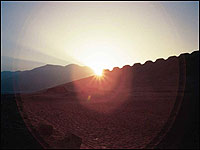 he towers at Chankillo mark the sun's progress across the sky, according to a new study in Science.
This suggests the sun may have played an
important role in religious and political life
long before the appearance of the
famous Inca sun cult.
Ivan Ghezzi is at the Catholic University of Peru and the national director of archeology.
www.npr.org/templates/story/story.php?storyId=7658847&sc=emaf
 Punkurí: puma celeste en Chimbote http://www.terra.com.pe:95/turismo/patrimonio/arte65.shtml
.
Caraz
www.ponyexpeditions.com Travel agent, tours, guides, bus, bike, accommodation, pizzas, supplies.
www.bikeperu.com
.
Huaraz
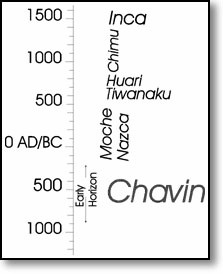
Exploring Chavín de Huántar
www.stanford.edu/~johnrick/chavin_wrap
Prehistoric stone tools and weapons some 10,000 years old ... were found in the main square of San Pedro de Chavin de Huantar
Hallan restos arqueológicos de 10 mil años de antigüedad en Ancash 19/10/06
 (RPP Noticias) Un grupo de investigadores de la Universidad de Stanford, EEUU,
descubrió restos arqueológicos de unos 10 mil años de antigüedad en la zona
de Chavín de Huantar, en la provincia de Huari, en el departamento de Ancash.
Los restos arqueológicos fueron hallados en el centro de la Plaza de Armas
del distrito de Chavín de Huantar donde se iba a levantar la infraestructura
de un Centro Cívico para la Ciudad.
El doctor John Rick, que dirigió el equipo de investigadores, presentó en el
museo de Huaraz ceramios, cabezas clavas, caracolas y estructuras de placas
pertenecientes a diferentes etapas y períodos como republicano,
colonial y período arcaico de Chavín.
http://www.rpp.com.pe/portada/nacional/52908_1.php
Chavín La cultura. (Español)
Chavin
A new National Museum of Chavín is to be constructed in 2006 in the town of Chavín... Conservation of the Circular Plaza - Dr. John Rick, Stanford University ...
www.globalheritagefund.org/where/chavin.html - 77k - Cached - Similar pages |
.
1985 Chavin (Archaeological site)
1985 Huascaran National Park
.
www.huaraz.org/lacabana Popular Guest House
.
Huarmey: Punto Lobos
HoustonChronicle.com - Peru finds evidence of mass seaside ... Chimú sacrifices
.
Paramonga Lizardo Tavara (Español)
.
Norte Chico, Aspero, Bandurria & Caral
Protege Perú Fotos de la Albufera del Medio Mundo, totorales, Caballitos y Caral.
Barranca
Caral First City in the New World?
An introduction from Smithsonian magazine.
PERU'S CARAL SUGGESTS CIVILIZATION EMERGED IN THEAMERICAS 1,000 YEARS EARLIER THAN EXPERTS BELIEVED
www.caralperu.gob.pe
Plan Maestro de Caral www.larepublica.com.pe/noticia_cs.jsp?pId=11
BBC - Horizon - The Lost Pyramids of Caral
CARETAS HOME PAGE ... Historial De CARAL
Caral RDBoyd .
Whitley Strieber's Unknown Country ... The Supe River Valley area of Peru, where Caral is located .
The Field Museum Information: Press Room - [ Traduzca esta página ]
... CHICAGO – New radiocarbon dates indicate that the site of Caral (23 km east of Supe, & km 182 marker north
of Lima, Peru) was home to the earliest known urban settlement .
Field Museum anthropologists establish date and importance of the Americas' oldest city
Radiocarbon dates of plant fibers indicate that Caral (120 miles north of Lima, Peru) was home to the earliest known urban settlement .
Oldest evidence of city life in the Americas reported in Science , early urban planners ...
The ancient Peruvian site of Caral may have been one of the first urban centers in the Americas, thriving more than a thousand years before other .
Mesoweb Reports - Archaeologists have announced a secure date of 2627 BC for the earliest parts of
the site of Caral in Peru. ... Caral was built before the domestication of grain. ... .
Trip to Aspero – Caral: Discovering The Most Ancient Civilization of America
La ciudad sagrada de Caral Supe - Indice
INDICE. Formato .PDF. Introducción. Capítulo I. Contexto Geográfico e Histórico
La Ubicación de Caral. Capítulo II. La Ciudad Sagrada de Caral. Capítulo III. ...
sisbib.unmsm.edu.pe/bibvirtual/libros/Arqueología/ ciudad_sagrada/indice.htm - 6k - En caché - Páginas similares
.
Civilization lost? | csmonitor.com
Caral, Peru has shattered the myth that civilization got a late start in
the New World. Nearly 5000 years ago, people here in the ...
www.csmonitor.com/2002/0103/p11s1-woam.html - 61k - Cached - Similar pages
.
CARETAS HOME PAGE - [ Translate this page ]
... finalmente, con inocultable orgullo, la doctora Ruth Shady, quien todos los fines
de semana viaja a Caral para continuar un trabajo que pone al Perú ...
www.caretas.com.pe/2001/1657/articulos/caral.phtml - 27k - Cached - Similar pages
Aerófonos de Caral, Perú - [ Translate this page ]
English Aerófonos de Caral, Perú. Los tubos más antiguos con un hoyo sonoro lateral
y un tabique en su interior. Foto de las flautas de Caral. ...
www.geocities.com/rvelaz.geo/caral/ecaral.html - 25k - Cached - Similar pages
[PDF] LAS FLAUTAS DE CARAL-SUPE: APROXIMACIONES AL ESTUDIO ACUSTICO ...
.
GEO.de - Peru: Amerikas älteste Stadt entdeckt! - [ Translate this page ]
...
Mesopotamien, Ägypten, Indien und China reiht sich nun zu Beginn des dritten Jahrtausends
unversehens auch ein altamerikanischer Standort ein: Caral in Peru. ...
www.geo.de/GEO/kultur_gesellschaft/geschichte/ 2001_11_GEO_aelteste_stadt_amerikas_index/?SDSID= - Similar pages
.
... Descubren quipu con más de 4500 años de antigüedad en Caral ...
de sus murales, los instrumentos musicales, sus elaborados textiles y
adornos personales, la variedad genética de sus ...
terraeantiqvae.blogia.com/2005/071602-peru.-descubren-quipu-con-mas... - 118k
.
Capacitan a mujeres de Caral en confecciones
www.elcomercioperu.com.pe/EdicionImpresa/Html/2006-08-19/ImEcNacional0561604.html
Caral on YouTube www.youtube.com/watch?v=P_VZ0_tNjsc&mode=related&search=
En medio de ofrendas funerarias
ENCUENTRAN RESTOS DE NIÑO DE 2 AÑOS EN CARAL
Huellas de pies y manos que datan de hace aproximadamente cinco mil años encontró el equipo de arqueólogos
del Proyecto Caral, sobre el piso de la también descubierta plaza circular “TinkuyMituKancha”, al norte de Lima.
El anuncio lo hizo la arqueóloga, y responsable del Proyecto Especial Arqueológico Caral- Supe, Ruth Shady,
dentro del marco de celebraciones por el décimo tercer aniversario de presentación de la civilización más antigua
de América. Shady informó que además localizaron los restos de un infante, de aproximadamente dos años,
adornado con cuencas cilíndricas de material orgánico y ofrendas de textiles quemados.
www.tnews.com.pe/not_am/nm291007.htm
CARAL Hallan subterráneos como los de Chavín Por TRAVEL UPDATE - 30/10/2007
www.travelupdate.com.pe/detalles.asp?id=2947&gid=12&pg=1&sc=index.asp
.
Museo de Arqueología y Antropología
Bibliografía y Hemerografía sobre la Ciudad Sagrada de Caral Supe .
.
.
Bandurria (Incluye video de Caral)
10 km al sur Huacho, frente a Playa Chica y la Albufera del Paraíso;
... caminos que habrían comunicado a Bandurria con Caral.
La ciudad sagrada de Caral-Supe, ubicada unos ...
trabajos ahora se centrarán en establecer los vínculos entre Bandurria y Caral ...
www.clarin.com/diario/2005/12/03/um/m-01101283.htm - 24k -
 Bandurria iluminada
Este sábado 14 de Octubre, se iluminará por primera vez después de 5000 años,
la ciudadela de Bandurria, ubicada a 10 kilómetros al sur de la ciudad de Huacho,
emerge entre la arena y el mar, un asentamiento arqueológico, que presenta....
Ver más
Descubren sitio arqueológico de 4,800 años de antigüedad en Huaral
Huaral, 06/11/06 (ANDINA).- Un grupo de especialistas descubrió el sitio arqueológico denominado Las Shicras,
de unos 4,800 años de antigüedad, en el valle del río Chancay-Huaral, informó hoy la Fundación Museo Amano,
que dirigió la investigación. [06/11/2006] http://www.andina.com.pe/NoticiaDetalle.aspx?id=103843
Early Monumental Architecture on the Peruvian Coast
Evidence of Socio-Political Organization and the Variation in its Interpretation.
© James Q. Jacobs, written in 2000.
http://jqjacobs.net/andes/coast.html
The New World's Oldest Calendar
Research at a 4,200-year-old temple in Peru
yields clues to an ancient people who may have
clocked the heavens.
By Anne Bolen
Lima
1988 Historic Centre of Lima
Más información sobre el Cápac Ñán Planes Maestros incluyen:
Chan Chán , Centro Histórico de Lima, Proyecto Nasca , Proyecto Maras , Machu Picchu
.
 It is recommended to register with your embassy.
.
Safe in Lima Good information, flight bookings & economic accommodation in an attractive part of Lima.
.
 |  | Huaca Pucllana Translate
El Parque Histórico Cultural Pucllana es resultado del afán científico por rescatar, conservar e investigar la Huaca Pucllana como uno de los monumentos más importantes de la ciudad de Lima. Incluye información arqueológica especializada. http://pucllana. perucultural.org.pe |
Pucllana on YouTube http://www.youtube.com/watch?v=3tTh1LGlmi8
Notable hallazgo en Huaca Pucllana
www.larepublica. com.pe/index.php?option=com_content&task=view&id=92107&Itemid=28&fecha_edicion=2005-10-19
Pucllana Lizardo Tavara (Español)
Pachacamac  Lizardo Tavara (Español)

Pachacamac official site & National Geographic in various languages

March Resources @ National Geographic Magazine in 7 languages.
.
Lima is good for Museums
Peru Museums

The Colonial Andes: Tapestries and Silverwork, 1530–1830
September 29, 2004–December 12, 2004
Exponen en España piezas antiguas del Museo del Oro del Perú Murcia, nov. 07 (ANDINA).-
 Más de 80 piezas precolombinas, pertenecientes al Museo del oro del Perú, Más de 80 piezas precolombinas, pertenecientes al Museo del oro del Perú, fueron presentadas hoy en el museo de Bellas Artes de Murcia, en el sureste de España, en una exposición que estará abierta al público hasta los primeros días de enero del 2007.
http://www.andina.com.pe/NoticiaDetalle.aspx?id=103960 |
The Spirit of Ancient Peru in San Francisco & Knoxville USA: www.tribalarts.com/feature/peru/index.html
Latin Trade: Fool's gold - Trade Talk - [ Traduzca esta página ] Attendance at the privately owned museum in Lima remained strong in the final months of 2001 after an investigation by consumer protection agency Indecopi ... Not the Gold Museum
www.findarticles.com/p/articles/mi_m0BEK/is_2_10/ai_82801229 - 26k - |
World Museums (En español)
Instituto Latinoamericano de Museos Includes list of World Heritage cultural & natural sites in Latin America.
www.ilam.org/pe/pe.html
Huaca Malena
102km South of Lima. Good links to other museums, sites etc:
http://huacamalena.perucultural.org.pe/enlaces.htm

Mágica ruta sur Lima Ica Arequipa
www.larepublica.com.pe/index.php?option=com_content&task=view&id=152254&Itemid=0
Ciudades de la mágica ruta sur www.perutravelmart.com.pe/spa/pto11_ciudades.htm#
Reserva Nacional de Paracas Plan Maestro 2003 – 2007
www.inrena.gob.pe/dganp/planes/rnparacas/plan%20maestro%20RNP%202003-2007.pdf
www.geocities.com/proyectonasca/museo.htm Museo Antonini
.
Nasca Centro Italiano Studi e Richerche Archeologiche Precolombiane
.
1994 Lines and Geoglyphs of Nasca and Pampas de Jumana
Más información sobre el Cápac Ñán Plan Maestros incluyen:
Chan Chán , Centro Histórico de Lima, Proyecto Nasca , Proyecto Maras , Machu Picchu
.
Cahuachi www.ctncpac.com/atos/posts/920.html
.
Cahuachi archaeological ceremonial center to open to tourismwww.peru.org.pe/perueng.asp?notic=5.
www.nazca.net Nazca, Moche, etc.
.
Puerto Inca Lizardo Tavara (Español)
Arequipa
2000 Historical Centre of the City of Arequipa
www.elcomercioperu.com.pe/EdicionImpresa/Html/2007-06-12/Vamos0737528.html
Colonial Tours, Santa Catalina 106, Arequipa. Telefax 054 286868.
.
Cuzco
1983 City of Cuzco
1983 Historic Sanctuary of Machu Picchu
1987 Manu National Park
www.atalantequechua.com/indexi.htm Trek, climb, 4 x 4, jungle, raft, & classic adventures from Cuzco.
www.aventuraquechua.com/ Trek, climb, 4 x 4, jungle, raft, & classic adventures from Cuzco.
www.instinct-travel.com Land of the Incas Tour Operator
Search Tuna Report for Machu Picchu
Choquequirau- The Other Machu Picchu New York Times 3rd June 2007
The lost city of Choquequirao Rumbos translated on Living in Peru.
Choquesuysuy Rumbos translated on Living in Peru.
Holes in ancient skulls reflect skilled medical care
Más información sobre el Cápac Ñán Plan Maestros incluyen:
Chan Chán , Centro Histórico de Lima, Proyecto Nasca , Proyecto Maras , Machu Picchu
Plan Maestro de Machu Picchu:
Falta de drenaje y control amenazan la ciudadela inca
www.elcomercioperu.com.pe/EdicionImpresa/Html/2005-03-13/ImpTemaDia0273012.html
consumer.es ::: Un equipo de arqueólogos descubre restos de una ...antigua civilización en el lago Titicaca ... 25 diciembre 2004 ...Han hallado un ídolo de oro de más de 30kgs...www.consumer.es/web/es/noticias/ educacion_y_ciencia/2004/08/23/107704.php - 51k - En caché - Páginas similares Descubren misteriosa civilización en el fondo del lago Titicaca ...
donde se presume se hacían sacrificios humanos, pero que con el paso del tiempo
quedó sumergida a más de 100 metros ... 25 de Diciembre del 2004 ...
www.aclantis.net/article7175.html - 42k - En caché - Páginas similares
Peru archeologists find Inca temple in Andes
www.ruta-inka.org
Más información sobre el Cápac Ñán Plan Maestros incluyen:
Plan Maestro, Proyecto Nasca, Proyecto Maras, Machu Picchu, Chan Chán,
Centro Histórico de Lima.
www.inc.gob.pe/proy7.shtml
Ancient Inca Road in Desperate Need of Protection
A preliminary study of the ancient highland road that linked the Inca Empire from
southern Colombia to Central Chile, found that only 5 percent of the 8,500 km route
is under some form of protection, and large sections of it have been lost entirely.
www.eurekalert.org/pub_releases/2003-09/ci-air090903.php
PROPUESTA; PEREGRINAJE POR EL QHAPAQ ÑAN:
QUITO-CUSCO; POTOSI-CUSCO
March along complete Inca Trail
www.quechuanetwork.org/wiraqochanan.cfm?yanantin=yachay_14&lang=s
www.quechuanetwork.org/yachaywasi/Qhapaq_Nan_Ruta_de_Sabiduria.doc

La Cámara Regional de Turismo
Amazon River Cruise
Iquitos-Peru.com
Expedición confirma que Amazonas es río más largo del mundo ...
www.rpp.com.pe/portada/nacional/80430_1.php - 46k - Cached
Were The Shang And The Inca Really Frisian/Magyar?
... The Inca were a white race, as we were told by Columbus, Pizarro, and Garcilaso
... In 1978 Michael Heltzer published his study of tablets from Ugarit. ...
all-ez.com/frisian-inka.htm - 86k - 19 Feb 2005 - Cached - Similar pages
Oldest Skeleton in Americas Found in Underwater Cave?
http://news. nationalgeograph ic.com/news/ 2008/09/080903- oldest-skeletons .html
ScienceDaily (July 17, 2008) — Research by a Valparaiso University geography professor and his students
on the creation of Kankakee Sand Islands of Northwest Indiana is lending support to evidence that the
first humans to settle the Americas came from Europe, a discovery that overturns decades of classroom
lessons that nomadic tribes from Asia crossed a Bering Strait land-ice bridge.
www.sciencedaily.com/releases/2008/07/080701193203.htm
Native American History
All across the Americas, archaeologists and anthropologists, along with geneticists,
linguists, geologists, and some of America's native peoples, are assembling new data,
reassessing older data, and generating new models that call into question both the
single genetic and cultural origin model as well as the Clovis First model.
And the answers now emerging to the questions of who were the First Americans,
from where did they come, how did they get to the Americas, when did they arrive in
the Americas, and what were their lifeways during initial colonization are very
different from those of just a few years ago and suggest a picture very different
from the standard textbook story of who the first Americans were.
www.cabrillo.edu/~crsmith/anth7_hist1.html
Hallan rastros humanos de hace 13.000 años en norte de Chile

¿El primer asentamiento humano de América , en el sur de Chile?
Dos arqueólogos estadounidenses reconocieron
que los grupos Clovis puede que no fueran la
primera cultura del continente americano.
Esto abriría las puertas al yacimiento de
Monte Verde, en el sur de Chile, como el
primer asentamiento humano de América...
Refutaron la teoría de que EEUU fue el
primer lugar habitado del continente.
Stafford y Waters indican en su estudio que
una reevaluación de la datación y de los
registros establece que la antigüedad de Clovis
fue en realidad de 11.050 y 10.800 años...
Esta señala que los primeros hombres que
poblaron el continente llegaron desde las islas
de la Polinesia, a través del Pacífico
http://www.diariode cuyo.com. ar/home/new_ noticia.php? noticia_id= 207369
Indian DNA links to 6 'founding mothers
Americas Settled 15,000 Years Ago, Study Says
|
|
Photo: First "America" Map Mystery |
| A 500-year-old map that makes the first known reference to "America" has some researchers puzzled as to how the mapmaker sketched out the world. |
http://newsletters.nationalgeographic.com/WBRH016B5C78D4C59CCFD379FB6650
Siberian, Native American Languages Linked -- A First
John Roach for National Geographic News March 26, 2008
A fast-dying language in remote central Siberia shares a mother tongue with dozens
of Native American languages spoken thousands of miles away, new research confirms.
http://news.nationalgeographic.com/news/2008/03/080326-language-link.html
Ancient Beachcombers May Have Travelled Slowly

Earliest known human settlement in the Americas raises new questions
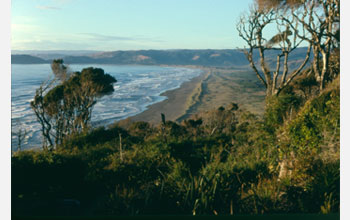
Chilean coastline and inland food samples raise questions about how migrants populated the Americas.
Credit and Larger Version |
May 8, 2008
New evidence, more questions. That's the thumbnail of the first new data reported in 10 years from Monte Verde, the earliest known human settlement in the Americas.
Evidence from the archaeological site in southern Chile confirms Monte Verde is the Americas earliest known settlement and is consistent with the idea that early human migration occurred along the Pacific Coast more than 14,000 years ago, but questions remain about just how rapidly that migration occurred.
Please see the next 5 by clicking on extreme right >>>


 www.huacadelaluna.org.pe


 Balneario de Huanchaco y sus Caballitos de Totoras.
 ElBrujoPeru www.xanga .com/ElBrujoPeru
  Le Petit Futé, Routard, Rough Guide Peru, Fodors, Frommers, Reise Knowhow, Dovè et Globetrotter.
 Stefan Loose
  Peru / Bolivien


Recent Comments