Uncategorized

  • Tours en espanol

    Site map

    Recomendado en las mejores guías turísticas internacionales,

    nuestro programa más popular incluye los siguientes atractivos, horarios,

    y costos inclusos de guía, transportes y entradas para 2 personas.

    Día 1. Llegada a Trujillo. Traslado al hotel. City Tour.


    Visitamos la Plaza de armas, Plazuela del Recreo, monumentos,

    y lo mejor de las casas coloniales y republicanas, iglesias, o

    urbanizaciones modernas, según su gusto.

    Las visitas son más factibles durante horas bancarias.

    US$10 por persona. 3 horas.

    Opcional: Cassinelli Museum (1 hora US$5pp), o

    Museo de Arqueología, Antropología e Historia, de la Universidad Nacional de Trujillo.

    Contrastar una colección privada de cerámica fina en un local curioso,

    con aquella científicamente excavada en el Museo de la Universidad.

    (1 hora) US$7pp por persona, incluso de entradas.

    Día 2. Tour Arqueológico

    Huacas del Sol y la Luna, y Campiña de Moche.


          www.huacadelaluna.org.pe
     
    Museo de Sitio de Chan Chan (Detalles abajo) www.unitru.edu.pe/cultural/arq/

    Almuerzo

     Huaca del Dragón (Arco Iris).

       
    Palacio nik-An (Ex-Tschudi) de Chan Chan

     Balneario de Huanchaco y sus Caballitos de Totoras.


    Este tour cuesta US$27 por persona, y demora 7 horas, entre 9am-4pm.

    La Campiña de Moche da la oportunidad para explicar la geología, clima, hidrografía, irrigación, flora, fauna y actividades económicas y la secuencia cultural.
    La Huaca del Sol fue la construcción más grande de las Américas, y la Huaca de la Luna luce relieves policromas extensas en un proyecto con excavaciones actuales. Tiene la opción de visitar el Mini Zoológico.
    El Museo explica la geografía y cronología de las épocas y culturas del norte del Perú, con artefactos de las culturas principales, incluso de objetos encontrados recién entre las Huacas.
    Ampliamos y aclaramos sus breves explicaciones.
    Chan Chan fue la ciudad más grande de las Américas cuando llegaron los Incas.

    Día 3. Complejo Arqueológico El Brujo

     ElBrujoPeru www.xanga .com/ElBrujoPeru


    Un recorrido de 40 kilometres hacía el norte por la carretera Panamericana y luego 20 kilometres al noroeste a través de cañaverales nos conduce a la Huaca Prieta, una Huaca costeña de la época precerámica de 4,500 años de antigüedad, un sitio luego extendido por la cultura Cupisnique, del Horizonte Temprano (Chavin); restos de las culturas Salinar y Virú/Gallinazo; 2 Huacas de la cultura Moche, El Brujo, donde actúan chamanes, y Cao Viejo con relieves policromas; cementerios Lambayeque y Chimú; y una iglesia colonial dominicana arruinada. US$30 por persona. 4 horas.
    Extra opcional: Pasamos por San José de Moro su museo de la sacerdotisa, para regresar a Trujillo o seguir a Chiclayo.

    Día 4 Visita a Museo Nacional de las Tumbas Reales de Sipán, Museo Nacional Sicán, y Túcume. 7 horas.
    Sipán ha rendido 12 tumbas, inclusos de las más ricas excavadas en el hemisfera occidental durante este siglo, y sus contenidos se exponen en el Museo.
    Túcume tiene 28 grandes pirámides, incluso de la construcción más grande de barro de las América, y su Museo de Sitio. US$48 por persona. Servicios terminan.

    Gold treasures from ancient Peru
    The Royal Tombs of Sipán
     

    Ampliación descriptiva de los sitios.

    1. Huaca del Sol
    A 3 km de Trujillo, esta piramide escalonada tiene 43 metros de alto. Según la tradición, se construyó en sólo 3 dias, por 200,000 hombres. Hay estimados que se utilizaron hasta 143 millones de adobes.
    Hace 100 años el alemán Max Uhle descubrió 23 entierros de la cultura Moche en la primera plataforma, y un cementerio Chimú afuera cerca al lado sur.
    No es permitido subirla, pero su tamaño es impresionante de la planicie o Huaca de la Luna.

    Huaca de La Luna
    Frente a la Huaca del Sol, también en el Valle de Moche.
    Dentro de murallas de adobe de 180 metros de largo norte-sur, y oeste-este, en 3 plataformas,
    se estima que quedan 8,000m2 de pinturas murales y relieves policromos nitidamente definidos.
    Su altura llega a los 28 metros, y proporciona extensas vistas sobre las excavaciones en la zona urbana del valle hasta los Andes, y el mar.
    Se han encontrado sacrificios humanos, tumbas, cerámica y textiles adornados con metales de la cultura Moche, y maquetas de madera y nácar de la cultura Chimú, representando ceremonias funerarias y plazas ceremoniales en honor a los ancestros. El horario es de 9am-4.00pm.
    Las entradas cuestan S/11.20 general, S/5.60 para universitarios, y S/1 para escolares.

    La zona urbana
    Se han descubierto canales, avenidas, callejones, casas de adobe, patios, fogones, cocinas para casas y grupos de viviendas, talleres de cerámica, y entierros con docenas de cerámica.

    2. Chan Chan
    Se dice que Takaynamo, el fundador de Chan Chan, vino del mar, aprendió la lengua de los nativos,
    construyó su templo y casa, y fue elegido líder.
    Fue el núcleo más importante de la cultura Chimú (S. IX-XV). Está considerada como la Ciudad precolombina de Barro más grande del mundo y ha sido declarada por la UNESCO como patrimonio Cultural de la Humanidad.
    Sobre un área de 14 km2 se dispersan restos de palacios, barrios populares, campos de cultivo, cementerios, etc., que testimonian el nivel alcanzado por esta cultura extendida en la costa peruana.
    Las 9 palacios o ciudadelas comprenden plazas y audiencias, en el sector ceremonial religioso,
    sectores civil y militar, pozos de uso ceremonial y cotidiano, un mausoleo, rodeados por depósitos,
    con corredores y laberintos dentro de murallas.

    Se comunicaron con los canales de irrigación, excelentes caminos y templos piramidales.
    Sus enormes muros han sido profusamente decorados con relieves de figuras geométricas, estilizaciones zoomorfas y seres mitológicos.
    Los talleres y viviendas populares se encontraron afuera en arquitectura intermedia y popular.
    Los Chimú fueron grandes artesanos en metales, cerámica textiles, tallados en madera, nácar y piedras, en mayor cantidad que los Moche.
    Es admirable el vasto sistema de acueductos subterráneos y acequias construidas para traer agua desde enormes distancias, dando lugar a que expertos y estudiosos opinen que la importancia de Chan Chan puede ser comparada con Teotihuacán, en Méjico o con las antiguas ciudades de Egipto, Mesopotamia y China.

    3. Museo de Sitio de Chan Chan
    A 5 kilómetros de Trujillo, en la carretera a Huanchaco, tiene maquetas de la arquitectura monumental, popular y intermedio; cronogramas y mapas del desarrollo cultural; fotografías del medio ambiente; restos de la epoca lítica; cerámica, textiles y metales; maqueta de Chan Chan con sonido y luz; dioramas de talleres de textiles y metales; réplicas de frisos en barro; herramientas de la pesca y
    agricultura; en un bosque de flora y fauna típica de la zona.
    Ha sido sede de 2 Cursos Panamericanos de conservación en 1996 y 1999 y el Segundo Coloquio sobre la Cultura Moche en 1999.

    Huaca del Dragón, o Arco Iris
    Este templo, en la carretera Panamericana a 4 kilómetros al norte de Trujillo, está decorado con
    figuras antropomorfas y representaciones estilizadas, y un arco iris semejante a un cienpies.
    Esperamos la reapertura del museo de sitio, con fotografías de la restauración, ídolos tallados en
    madera con incrustaciones de nacar y cerámica Chimú, Cajamarca y Recuay extraída de la zona.

    La Esmeralda
    Ubicada 3 cuadras atrás de la Iglesia de San Salvador de Mansiche, a 2.5 kms de la ciudad de Trujillo, tiene rampas y plataformas decoradas con nutrias marinas, peces y aves, y redes de pescar.
    Visitas
    Se vende boletos en el Palacio Tschudi, Huaca del Dragón o Arco Iris, y Museo de Sitio.
    Valen para estos tres sitios, y la Huaca Esmeralda. El Horario es de 9am-4.30pm.
    Las entradas cuestan S/11 general, S/1 para escolares, y S/5 para jubilados, profesores,
    estudiantes universitarios, y fuerzas militares y policiales.
    Pueden estar cerrados el 25 de diciembre y el 1 de enero.

    4. El Brujo
    En el distrito de Magdalena de Cao cuenta con atributos excepcionales, por su ubicación geográfica
    e histórica y sus hallazgos culturales, por su entorno natural, por sus actividades económicas
    tradicionales y actuales.
    Por ubicarse frente al mar y la campiña, constituyó y constituye una fuente rica en especie marinas
    y agrícolas.
    El Brujo vincula la cultura con la naturaleza, y las dos categorías de Turismo más populares en el Perú.
    Estos valores se complementan por el aspecto visual y los constantes descubrimientos; son excepcionalmente llamativos en 'El Brujo' y en los medios de comunicación, museos y exposiciones, actuales y virtuales.

    Tiene un valor histórico indiscutible por su uso por un compendio de culturas desde los primeros horticultores, hasta la actualidad; su importancia cultural durante 2 milenios; el primer uso en el Perú del radio carbóno 14 para fechar restos de materiales orgánicos; una tradición para la conservación desde los mates pirograbados en 1946 hasta el Programa actual; la arquitectura monumental de adobes marcados; la pintura mural y primeros relieves policromos, con los temas predilectos de la iconografía Moche; la fastuosidad de la cerámica Moche; la orfebrería Moche; las tumbas de cámara con pintura mural, un re entierro, la tumba de una sacerdotisa, el único entierro en un pozo espiral, y un imponente ídolo y estolicas talladas en Madera, todos de los Moche; la calidad y complejidad del arte y arquitectura Moche y su estado de conservación; los textiles fines de cientos de entierros de la cultura Lambayeque, incluso de un entierro adentro de la arquitectura de la Huaca Cao Viejo; la arquitectura y un extenso cementerio Chimú; una iglesia colonial de los padres dominicos; y la evidencia de fenómenos naturales a través del tiempo.

    El Complejo El Brujo debió haber albergado a un importante centro poblacional en la parte baja del valle, donde se habrán centralizado las actividades políticas y religiosas especialmente a fines de la
    época mochica, como capital religiosa del valle.

    Los restos encontrados son de la Época Precerámica (Bird 1946); culturas Cupisnique, Salinar, Gallinazo, Moche, Lambayeque, Chimú; épocas colonial y actual. Excavando la réplica de la tumba en el Museo, se encontró cerámica colonial.

    El Brujo tiene aspectos visuales, como los colores, contrastes y calidad del arte, cuyo estado de
    conservación se ha facilitado por los artistas de antaño y las técnicas modernas de la conservación.
    Estos aspectos visuales culturales, y su panorama natural de sus miradores sobre el mar y la campiña; son valores muy llamativos a los visitantes.

    Las entradas cuestan S/11.20 general, y S/5.60 para estudiantes.

    Discovery Channel : VIAJE A LA TIERRA INCA
    ... Con el hallazgo de la tumba real de Sipán en Huaca Rajada, las investigaciones en
    Huaca El Brujo, en las tumbas de Sicán y en Huaca de la Luna

    Circuitos
    City Tours, historia, casonas, iglesias y monumentos.
    Huacas del Sol y la Luna, Huaca del Dragón o Arco Iris, Huaca Esmeralda,
    Palacio Tschudi de Chan Chan, Huanchaco.

    Trujillo - El Brujo - San José de Moro - Chiclayo.
    Sipán, Museo Brúning, Túcume, Sicán.

    Chachapoyas, Kueláp, Leimebamba, Cajamarca, Kuntur Wasi.

    CHAN CHAN, HUACA DEL DRAGON (ARCO IRIS) & ESMERALDA.
    HUACAS DEL SOL Y LA LUNA, Y EL BRUJO.
    HUANCHACO, CABALLITOS DE TOTORA, MALABRIGO.
    MUSEOS, CASAS COLONIALES, IGLESIAS.
    EXPOSICIONES, GALERIAS, MERCADOS, TRASLADOS.
    SAN JOSÉ DE MORO, CHEPÉN, LAMBAYEQUE.
    SIPÁN, TÚCUME, SICÁN, MUSEO BRUNING.
    KUNTUR WASI, CAJAMARCA, KUELAP.
    SIMBAL, VIRÚ, SECHÍN, LAS HALDAS, HUARAZ.
    FOLKLORE, MÚSICA Y DANZAS (PEÑAS Y MARINERAS); CABALLOS DE PASO.
    ARTESANÍA, GRABADOS Y T-SHIRTS. TRANSPORTES,TELECABLE, INTERNET.

    MICHAEL WHITE B.CCSS. TURISMO
    CLARA LUZ BRAVO DÍAZ
    GUÍA OFICIAL DE TURISMO - IDIOMAS
    CAHUIDE 495 (Frente a HUAYNA CAPAC 542)
    URB. SANTA MARIA
    TRUJILLO, PERU
    7 CUADRAS AL SUR DE LA PLAZA DE ARMAS
    (PROLONGACIÓN DE ORBEGOSO)
    www.xanga.com/TrujilloPeru Tours etc

    www.xanga.com/CasadeClara para el Alojamiento

    E-MAIL: microbewhite@yahoo.com
    TELÉFONO (044)243347/299997    CELULAR (O44) 9662710

  • Tours en Francais

    Site map


    Recommandés dans les guides Lonely Planet et Footprint du Pérou et Amérique du Sud, National Geographic Travelers Peru,

    Le Petit Futé, Routard, Rough Guide Peru, Fodors, Frommers, Reise Knowhow, Dovè et Globetrotter.

    www.routard.fr/comm_forum_detail_message.asp?debut=272&pere=75765&ordre=285&forum=107&msg=75765

    seniorplanet.fr : portail senior ( rencontre, emploi, tourisme ... - [ Translate this page ]
    ... À Trujillo, un sympathique B&B : chez Michael White et Clara Bravo qui reçoivent
    des hôtes dans leur grande maison. Tous deux sont aussi des guides ...
    www.seniorplanet.fr/animations/ fr/204_voyages/perou/perou_06.php - 87k -
    Cached - Similar pages

    Le tour du monde d'Elodie et Manu

    Michael White B.Sc.Soc.Tourisme
    Clara Bravo, Guides - Langues
    Cahuide 495 (ex Huayna Capac 542)
    Urb. Santa Maria, Trujillo, Pérou
    7 rues au sud de la plaza (pour Orbegoso)
    Tel (044)243347/299997/cellular 9662710/9607119
    Telefax +51 44 299997
    E-mail:
    microbewhite@yahoo.com
    Webpages
    www.xanga.com/TrujilloPeru    (5 langues)

    Albergue www.xanga.com/CasadeClara

    Chan Chan, Temples de l’Arc en Ciel (Dragon ) et Esmeralda.
    Pyramides du Soleil, Lune et El Brujo.
    Huanchaco, bateaux et Malabrigo.
    Musées, maisons et églises coloniales.
    Expositions, galeries et marchés, transferts
    San José de Moro, Chepén, Lambayeque
    Sipán, Túcume, Musée de Brüning, Sipán y Sicán.
    Kuntur Wasi, Cajamarca, Kuelap.
    Simbal, Virú, Sechín, Las  Haldas, Huaraz.
    Folklore, musique, danses (peñas, marineras),
    chevaux (caballos de paso).
    Logement et cuisine. Livres, art, et
    T-shirts de la meilleure qualité.
    Transport, cable tv, internet.
    .
    Recommandé dans les meilleurs guides touristiques internationaux, notre programme le plus populaire inclut
    les prestations suivantes, temps, et prix inclua guide, les transports et entrées par personnes.

    Jour 1. Rendez-vous a l’hotel. City Tour. Visite de la Plaza de Armas, Plazuela del Recreo, monuments, et
    les plus belles maisons coloniales et républicaines, églises, ou quartiers modernes, suivant votre souhait.
    Les visites des maisons son plus faciles durant les heures de travail. 3 heures. US$10 par personne.
    .
    Option: Le Musée Cassinelli

    Comparez une collection privée de  céramiques  fines en un local curieux, avec celle scientifiquemente
    étudiée au Musée de l’Université.
    1 heure. US$5 par personne, entrée incluse.

    Jour 2.  Tour Arquéologique
    Les Pyramides (Huacas) du Soleil et la Lune, y Campiña de Moche.
    Le Musée d’Arquéologie, Anthropologie et Historie, de l’ Université Nationale de Trujillo.
    Déjeuner.                                                                                                                                                               Le Temple (Huaca) du Dragon (Arc au Ciel).
    Le Palais Tschudi de Chan Chan
    La Plage de Huanchaco et ses bateaux (Caballitos de Totoras).
    Ce tour se realise en 7 heures, de 9am á 4pm. US$27 par personne.
    .
    La Campiña de Moche donne le opportunité d’expliquer la géologie, le temps, l´hydrografie, l’irrigation,
    la flore, la faune et les activités économiques et une séquence culturelle.
    La Huaca del Sol fut la construction la plus grande des Amériques, et la Huaca de la Lune montre des
    reliefs polychromes importants extenses en un projet avec des  excavations recentes.
    Le Musée explique la geographie et la chronologie des époques et cultures du nord du Peroú, avec restes
    des cultures principales, incluant des  objets encontrés récemment dans et entre les deux Huacas.
    Chan Chan fut la ville la plus grande des Amériques quand les Incas sont arrivés.

    Jour 3 . Complex Arquéológique El Brujo.
    Une distance de 40 kilomètres au nord par la route Panaméricaine et après 20 kilomètres a l’ouest dans
    Cain de Sucre nous conduit a la Huaca Prieta, un Temple sur la côte de l’époque précéramique de 4,500 ans
    d’ancienneté, un site alors  très etendu de la culture Cupisnique, de Horizonte Temprano (Chavin);
    restes des cultures  Salinar y Virú/Gallinazo; 2 Temples de la culture Moche, El Brujo, où pratiquent les
    chamanes, et Cao Viejo avec reliefs polychromes; cimetières Lambayeque et Chimú; et une église coloniale
    dominicaine en ruines. 4 heures. US$25 par personne.
    Nous passons par San José de Moro, son musée et ensuite nous passons la soirée à Chiclayo. 2 heures.

    Jour 4. La visite au Musée de Sican (Ferreñafe) , Musée de Sipán (Lambayeque),  y Túcume.
    Sipán a mis a jour 12 tombes, incluant deux  des plus riches exploitées dans le monde occidental durant
    ce siècle, et leur contenu est exposé au Musée.
    Túcume comprenant 28 grandes pyramides, inclut la construction la plus grande de toutes les Ameriques,
    et son Musée. 7 heures. US$60 par personne.

    (De Chiclayo, nous pouvons visiter au Musée de Sican (Ferreñafe), Musée de Sipán (Lambayeque), y Túcume
    (US$40 par personne).


    Option. Extension a Museo Brüning Sipán et/ou Batán Grande.

    Huaca del Sol (Pyramide du Soleil)

    A 3 kms au Sud Est de Trujillo, cette pyramide mesure 43 mètres de haut. Une légende dit qu'elle a été
    construite en 3 jours seulement, par 200.000 hommes. Environ 143 millions de briques de boue sechée la
    constituent. Il y a 100 ans, l'Allemand Max Uhle a découvert 23 tombes Moche dans la première plate-forme
    de la pyramide et un cimetière Chimú près de sa façade Sud. Bien qu’interdite d’acces, sa taille est
    impressionnante vue de sous ou vue de la Pyramide de la Lune.

    Huaca de La Luna (Pyramide de la Lune)

    Elle est située a 150 mètres a l’Est de la Pyramide du Soleil, egalement a gauche de la rivière Moche.
    À l'intérieur des murs d’enceinte - longs de 180 mètres du Nord au Sud, et de 215 mètres d’Est en Ouest -
    s’elevent 3 plate-formes. 6.000m2 de tableaux muraux et de bas-relief polychromes minutieux sont sculptes
    a l’interieur et l’exterieur. 28 metres d'un hauteur estimée de 32 mètres au total persistent, lesquels
    fournissent des temoignages significatifs sur les recherches archeologiques dans la région urbaine Moche,
    la vallée, les Andes, et l'océan Pacifique.

    Les découvertes incluent des signes de sacrifices humains, des tombes, des céramiques, et des tissus
    décorés avec les métaux propres a la culture Moche. On trouve egalement des modèles en bois incrustés
    de coquillages de mer, caracteristiques de la culture Chimú, qui représentent des scenes d’enterrements
    et d’offrandes rituelles en l’honneur de leurs ancêtres. Le site est ouvert tous les jours de 9h00 a 16h30.
    L'entrée coute S/5, et S/1 pour les écoliers. Il est possible d’acheter un ticket complementaire pour
    visiter les decouvertes les plus recentes.

    La région urbaine

    Les fouilles ont révélé canaux, avenues, rues latérales, maisons de briques sechees, patios, foyers, et
    cuisines pour les habitations et groupes d'habitations, ateliers de céramique, et tombes avec des douzaines
    de céramiques.

    Chan Chan

    On dit que Taykanamo, le Fondateur légendaire de Chan Chan, est venu de l'océan, qu’il a appris la langue,
    construit son temple et sa maison, et a été elu chef.

    Chan Chan était le centre le plus important de la culture Chimú (IXe-XVe siecles après Jésus-Christ).
    Elle est considérée comme la plus grande ville pre-colombienne au monde faite de briques de boue sechées,
    et a été classée au Patrimoine Mondial de l’Humanite par UNESCO en 1986.

    Sur 14 km2 sont dispersés des restes de palais, faubourgs populaires, champs cultivés, cimetières, etc.,
    cela met en evidence le niveau atteint par cette culture s’etant etendue sur la moitie de la côte péruvienne.

    Les 9 palais ou citadelles comprennent des places et auditoriums, on trouve dans les secteurs cérémoniaux
    religieux, civils et militaires, des puits a usage cérémonial et journalier, un mausolée, le tout entouré
    par des magasins, avec des couloirs directs et des labyrinthes à l'intérieur des murs externes.

    Ils ont été connectés par des canaux d'irrigation, d’excellents chemins et des temples pyramidaux.

    Leurs murs imposants ont été décorés abondamment avec des reliefs de figures géométriques, zoomorphiques
    et d’etres mythologiques.

    Les ateliers et habitations populaires sont situées a l’exterieur, dans un style architectural moins elaboré.
    Le peuple Chimú maitrisait le travail des métaux et du bois, de la céramique, des coquillages, de la pierre
    et du tissage, de maniere plus accomplié que la civilisation Moche.

    Un vaste systeme d'aqueducs souterrains et de canaux d’irrigation sur de longues distances evoque les
    hypotheses d'experts suivantes : l'importance de Chan Chan est comparable à celle de Teotihuacán, au
    Mexique, ou des villes anciennes d'Egypte, de Mésopotamie et de Chine.

    Musée de Chan Chan (Museo de Sitio)

    Situé á 5 kilomètres de Trujillo sur la route de Huanchaco, dans un cadre naturel typique de la region,
    le musee de Chan Chan expose des modèles d’architecture populaire, des cartes chronologiques, geographiques,
    une exposition son et lumière du développement culturel; des photographies de l'environnement naturel;
    des vestiges de l'Âge de pierre; des céramiques de 5 cultures, tissus et métaux; des modèles grandeur nature
    d’ateliers de tissage et de métallurgie; des copies exactes de frises; et des outils de pêche et du materiel
    agricole. Le site a accueillis 2 Réunions de Conservation Panaméricaine en 1996 & 1999, et la deuxième
    Réunion sur la Culture Moche en 1999.

    Huaca del Dragón, ou Arco Iris

    (Temple du Dragon ou Temple de l'Arc-en-ciel)

    Ce temple, situé sur l'Autoroute Panaméricaine á 4 kms au nord de la ville de Trujillo, est décoré de figures

    anthropomorphiques aux representations stylisé, et d’ un arc-en-ciel semblable à un mille-pattes.

    La réouverture du musée du site est attendue, avec des photographies de la restauration, des idoles en bois
    sculptés incrustatés de coquillages, et des céramiques de la culture Chimú, Cajamarca et Recuay, découverts
    dans la région.

    Le Temple Esmeralda

    Situé á 3 blocs derrière l'église de San Salvador de Mansiche, á 2.5 kms á l’ouest du centre de Trujillo,
    ce temple composé de rampes et de plate-formes est décorés avec des loutres de mer, poissons et oiseaux,
    et ornement représentant des filets de pêche.

    Les visites

    Les billets sont vendus au Palais Tschudi, Temple du Dragon ou Temple de l'Arc-en-ciel (Arco Iris),
    et au Musée de Chan Chan. Ils sont valides pour ces 3 sites, plus le Temple Esmeralda.
    Les sites sont ouverts de 9am á 4.30pm.

    L'entrée coûte 11 S, (1 S pour les scolaires et 5 S pour les retraités Péruviens, professeurs, étudiants,
    Militaires et policier. Fermés le 25 décembre et le 1er janvier.

    El Brujo

    Localisé dans le district de Magdalena de Cao, il beneficie d’un exceptionnel environnement géographique et
    historiques naturel, de part ses découvertes culturelles, et ses activités économiques et traditionnels.

    Situé entre Océan et campagne il continue à être une source riche en espèce marines et agricoles.
    El Brujo aide au développement culturel du Perou avec sa nature, son archéologie et son eco-tourisme
    trés populaires. Ces valeurs sont complémentées par ses aspects visuels et ses découvertes constantes;
    ils sont exceptionellement representés dans le média, musées et expositions, sous formes réels et,
    plus moderne virtuelles.

    Le site a une valeur historique indubitable pour son usage par un abrégé de cultures des premiers
    horticulteurs, jusqu'à aujourd'hui; son importance culturelle pendant 2,000 années; le premier usage au
    Pérou de carbone 14 pour dater des matières organiques; une tradition de conservation des gourdes gravé
    par le feu de 1946 jusqu'àu Programme réel; l'architecture monumentale avec les briques marquées; les
    tableaux muraux et les premiers reliefs polychromes avec les thèmes predilectifs d'iconographies Moche;
    le soin méticuleux des céramiques Moche; le travail des métaux Moche; les tombes dedans les chambres
    avec les peintures murales, un re-enterrement, la tombe d'une prêtresse, une tombe seule dans un puits
    en spirale, une idole imposante tenant sa lance sculpté en bois, tout de la culture Moche; la qualité
    et la complexité de leur art et architecture et leur état de Conservation; les tissus fins de centaines
    de corps retrouvés de la culture Lambayeque, y compris un enterrement à l'intérieur de l'architecture du
    temple appelé Huaca Cao Viejo; l'architecture et un cimetière Chimú étendu; une église coloniale des
    pères Dominicains; et les évidences de phenomènes naturels partout dans temps.

    L’ensemble du complexe El Brujo a dû loger un nombre important de la population dans la partie
    inférieure de la vallée où la politique et les activités religieuses auraient été centralisées
    essentielement à la fin de la période Moche en n’en faisant le centre religieux de la vallée.

    Les découvertes sont de la période Preceramic (Bird 1946); les cultures Cupisnique, Salinar, Gallinazo,
    Moche, Lambayeque, et Chimú; colonial et contemporaine. En deterrant la copie exacte de la tombe dans
    le Musée, les céramiques coloniales ont été trouvées.

    El Brujo a des atouts visuels, comme les couleurs, les contrastes et les qualité de son art, dont l'état
    de conservation a été facilité par les artistes du passé et les techniques d'aujourd'hui.
    Ces aspects culturels, et le panorama naturel de ses vues sur l'océan et la campagne sont de grandes
    attractions pour les visiteurs.

    National Geographic : Énigmes d'outre-tombe : les mystères du cas Moche

    http://4autourdumonde.free.fr/Perou_Argu14.htm description d'une visite passé.

    seniorplanet.fr : portail senior ( rencontre, emploi, tourisme ) ...
    ... plage. À Trujillo, un sympathique B&B : chez Michael White et Clara Bravo qui reçoivent des hôtes

    dans leur grande maison.

    Que sont les meilleurs livres/guides pour Peru et Amérique de Sud en francais?
    www.amazon.fr/exec/obidos/tg/browse/-/407202/1/402-7848399-9907363?rank=%2Bdaterank&x=10&y=13   

    www.lefigaro.fr

    le 4 de aout 2001 a 14 pages: Pérou - L'incroyable découverte - La civilisation des Mochicas

    Que sont les meilleurs sites internet pour Peru et Amérique de Sud en français?

    www.lonelyplanet.fr                                       Forums

    www.routard.com                                        Forums

    www.americas-fr.com/                                       La revue des Ameriques
    www.americas-fr.com/geographie/perou.html          La revue de Perou
    www.nouvelles-frontieres.fr/Guide/PER/PER_Avoir.htm                  Les sites à ne pas manquer
    http://www.mcc.gouv.qc.ca/reseau-archeo/ Archeo-Quebec
    www.fjord-best.com/alex/principale4.htm#dausansDauphin,balleine en Trujillo, Nord Perou, Sudamerique
    www.culture.fr/culture/arcnat/lascaux.fr

    FRANCIA / La Cueva de Lascaux Información sobre esta cueva, su descubrimiento, los métodos de datación,

    con una visita virtual y prueba de conocimientos. 

    Tours
    Tours de ville, histoire, maisons coloniales, églises, monuments. 
    Pyramides du Soleil & la Lune (Sol y Luna),  
    Temples du Dragon ou Arc au Ciel (Arco Iris) et Esmeralda,  
    Palais Tschudi de Chan Chan, Huanchaco.                                                             
    Trujillo - El Brujo - San José de Moro - Chiclayo. 
    Sicán, Sipán et leur Musées, Musée Brúning, Túcume, Kuntur Wasi. 

  • Tours in Italiano

    Site map

    Raccomandati nei libri Lonely Planet EDT e Footprint del Perù e America
    meridionale, Le Futé, Fodors, Reise Knowhow e Globetrotter.
    Michael White B.C.Soc.Turismo
    Clara Bravo, Guide – Lingue
    Cahuide 495 (e Huayna Capac 542)
    Urb. Santa Maria, Trujillo, Peru
    7 strada a sud della Plaza de Armas (per  Orbegoso)
    Tel +51 44 243347/299997  cellulare 9662710/9607119
    E-mail:
    microbewhite@yahoo.com 
    Webpages
    www.xanga.com/CasadeClara Albergo
    www.xanga.com/TrujilloPeru 5 lingue

    Scaruffi e il Perù
    A Trujillo: Clara Luz Bravo Diaz (nota ai maggiori alberghi).

    Il Perù..., diario di viaggio di Lara.
    VIAGGIO IN PERU' di Lara.…Ci informiamo per i tour ai siti archeologici, tutti ci consigliano Clara Luz Bravo,
    citata anche dalla LP. ...
    www.inviaggionelmondo.it/DIARIO…LARA.htm

    Viaggio in Perù 2003
    www.pianetaluca.com/peru2003/Peru2003_p6.html


    Luoghi da visitare e servizi offerti:
    Chan Chan, Templi dell'Arcobaleno (o Drago)(Arco Iris o Dragon) ed Esmeralda. 
    Templi (Huacas) del Sole, Luna ed El Brujo.
    Huanchaco, barche di totora, Malabrigo.
    Musei, case e chiese coloniali.
    Mostre, gallerie e mercati, transfers.
    San José de Moro, Chepén, Lambayeque
    Sipán, Túcume, Museo di Brüning.
    Kuntur Wasi, Cajamarca, Kueláp.
    Simbal, Virú, Sechín, Las  Haldas, Huaraz.
    Folclore, musica, danze (peñas, marineras), cavalli (caballos de paso).
    Pernottamento e pasti, libri, arte, e T-shirts della migliore qualitá.
    Transporto, TV cable, internet.

    In nostri nominativi come guide turistiche sono raccomandati nelle migliori pubblicazioni internazionali ed il
    nostro programma più popolare include i luoghi di seguito illustrati, i costi dei diversi itinerari proposti
    ed tempi necessari. In linea generale ad ogni itinerario corrisponde una intera giornata di escursione.
    Si potrebbero naturalmente verificare nelle variazioni nei tempi e nei costi non dipendenti dalla nostra
    volontà ma che provvederemo a comunicare in modo tempestivo a tutti gli interessati.

    I Itinerario - Giro archeologico 

    Visita ai Templi (Huacas) del Sole e della Luna e alla Campiña de Moche – visita al Museo d'Archeologia,
    Antropologia ed Historia della Università Nazionale di Trujillo
    Colazione
    Visita al Tempio dell'Arcobaleno (o Drago)(Arco Iris o Dragon) – Visita del Palazzo Tschudi all’interno
    della meravigliosa città antica di Chan Chan.
    Visita alla spiaggia di Huanchaco dove si possono ammirare le bellissime barche di tortora usate ancora oggi
    dai marinai per la pesca.
    Costo del pacchetto: US$27 per persona; durata circa 7 ore – inizio del tour circa verso le ore 9am,
    data di apertura dei siti archeologici.

    La visita alla Campiña de Moche dà l’opportunità di spiegare la geologia, il tempo, l’idrografia,
    l’irrigazione, la flora, la fauna ed le attività economiche che nel tempo si sono susseguiti in questa zona
    del Perù e la sequenza delle culture che si sono avvicendate. Ai Templi si possono ammirare estesi rilievi
    murali originali con dipinti policromi e si può assistere in diretta agli scavi degli archeologici.

    Il Museo della città spiega la geografia e cronologia delle principali età e culture del Nord del Perù, con la
    esibizione delle culture principali, inclusi oggetti trovati di recente durante gli scavi effettuati ai templi.

    Il Tempio del Sole è la costruzione di terra pre-Colombiana più grande delle Americhe e Chan Chan era la
    città più grande, costruita in adobe, delle Americhe quando gli Inca arrivarono a conquistate queste zone.

    II Itinerario - . Giro della città
    Vi porteremo a visitare le due piazze principali e i monumenti, nonchè le più belle case coloniali e le
    chiese, nonché i moderni quartieri, sempre in accordo con le vostre preferenze.
    Il costo della visita è di US$10 per persona. È meglio effettuare la visita al mattino in quanto c’è
    possibilità di trovare più case coloniali aperte rispetto al pomeriggio.

    Visita al Museo Cassinelli.
    All’interno del Museo è presente una meravigliosa collezione privata di ceramiche delle culture Chavin,
    Salinar, Virù/Gallinazo, Moche, Recuay, Lambayeque, Huari, Chancay, Chimù, ed Inca. 

    Il costo della visita è di US$5 per persona, inclusa l’entrata.

    III Itinerario - Complesso Archeologico El Brujo.

    Un trasferimento di 40 chilometri a nord di Trujillo seguendo la via Panamericana e poi 20 chilometri
    ad ovest tra le piantagioni di canna da zucchero ci condurrà al tempio chiamato Huaca Prieta, un tempio
    antico di 4,500 anni del periodo preceramico ove si possono ammirare suggestive costruzioni della cultura
    Cupisnique, del periodo Chavin; sono inoltre presenti resti delle culture Salinar e Virú/Gallinazo,
    due tempi Moche, El Brujo, dove si praticava la medicina tradizionale, ed infine Cao Viejo coi rilievi
    dipinti policromi, cimiteri, Lambayeque e Chimù, ed una chiesa dominicana coloniale in rovina.
    Costo della visita US$25 per persona.

    IV itinerario - Sipán - Museo Brüning - Túcume - Sicán

    Visita agli scavi di Sipán, al Museo Brüning e Túcume. Gli scavi presso il sito archeologico di Sipán
    hanno portato alla luce ben 12 tombe, incluse fra le più ricche scavate nel nuovo mondo durante questo
    secolo ed il loro contenuto, compresa la famosa tomba del “Signore di Sipan” che può essere ammirato
    al Museo di Brüning.
    Visita al sito archeologico di Túcume composto invece da 28 grandi templi, inclusi nella costruzione di
    terra più grande delle Americhe.
    Costo della visita US$60 per persona

    * * * * *

    La sera possiamo inoltre accompagnarvi a visitare i luoghi di folklore (peñas), o vedere marinera,
    tondero o festejo presso gli Hotel.

    Possiamo inoltre raccomandarVi anche alcuni nominativi di Hotel o Alberghi a conduzione familiare per
    il Vostro soggiorno a Trujillo.

    Inoltre ci occuperemo del Vostro trasferimento sia all’arrivo sia alla partenza.

    Naturalmente tutte le nostre proposte possono essere modificate a seconda dei Vostri programmi e
    delle Vostre esigenze.

    Questo perché ci fa piace ascoltare e non solo parlare ma soprattutto ci fa piacere incontrare e
    conoscere gente nuova.

    1. Huaca del Sol (Piramide del Sole)   
    È situata a 3 chilometri a est di Trujillo, questa piramide  è alta 43 metri. La leggenda dice che fù
    costruita in soli 3 giorni, da 200,000 uomini ed è formata da 143 milioni di adobe (mattoni di fanga).
    100 anni fa il tedesco, Max Uhle scoprì 23 tombe dalla cultura Moche nella prima piattaforma e un
    cimitero Chimú vicino alla facciata  meridionale. Sebbene arrampicarsi è proibito, la sua taglia
    risulta impressionante sia vista da sotto, o nel panorama, dalla Piramide della Luna.              


    Huaca La Luna (Piramide della Luna)   
    Si trova a 150 metri ad est della Piramide del Sole, sempre sul lato sinistro del fiume Moche. I muri di adobe,
    raggiungono 180 metri de nord a sud, e di 215 metri da est a ovest. Si valuta che esistano 6,000m2 di dipinti
    murali e relievi dei quali è tuttora possibile ammirare i particolari grazie al buono stato di conservazione.
    Dei 32 metri di altezza della piramide ne rimangono 28, dall´alto dei quali si gode di una vista spettacolare
    sugli scavi  nell’area urbana della cultura Moche, la valle, le Ande e l'Oceano Pacifico.    
    Sono stati scoperti luoghi adibiti a sacrifici umani, delle tombe, ceramiche e telle decorate con metalli
    appartenenti alla cultura Moche, e modelli di legno  con gusci del mare tropicali incastonati alla
    cultura Chimú, rappresentando funerali & offerte rituali in piazze cerimoniali in onore dei loro antenati. 
    É aperto tutti i giorni dalle 9am alle 4.30pm. Il biglietto, per adulti e studenti è di S/5, S/1 per bambini,
    della scuola.

    É possibile visitare gli ultimi scavi pagando un biglietto  supplementare.   
    Area urbana   
    Scavi recenti hanno rivelato la presenza di canali, viali, vicoli, case di adobe, cortili, focolari per case
    e per gruppi di case, laboratori di ceramica e tombe nelle quale sono state ritrovate  dozzine di ceramiche.

    2. Chan Chan   
    La leggenda dice che Taykanamo, Il fondatore di Chan Chan, venne dall'oceano, imparaò la lingua madre,
    costrut il suo tempio e la sua casa, e ne divenne leader.    
    Oltre ad essere il nucleo più importante della cultura di Chimú (secolo IX-XV D.C.) è considerato la più
    grande città di adobe dell’epoca  pre-colombiana esistente al mondo ed è stata dichiarata Patrimonio Mondiale
    da UNESCO nel 1986.
    In  un'area di 14 km2 sono stati trovati  9 palazzi, quartieri popolari, campi coltivati, e cimiteri, che ci
    hanno permesso di conoscere più a fondo questa cultura estesa per quasi la meta dell’odierna costa del Perù.  
    9 palazzi o cittadelle sono formati da piazze e auditori, nei settori cerimoniale religioso, civile e militari,
    fonti per uso cerimoniale e quotidiano, un mausoleo, il tutto circondato da magazzini con corridori diretti
    e labirinti lungi i muri esterni.

    Furono connessi coi canali irrigatori, strade eccellenti e tempi piramidali. Gli enormi muri furono decorati
    profusamente con stucchi che rappresentono figure geometriche, disegni zoomorphi ed esseri mitologici.   

    Gli laboratori artigiani e case popolare, la cua architettura risulta più  povera, è la archittettura intermezza,
    si trovano  di fuori dei palazzi. I Chimú furono grandi artigiani,  lavorarono metalli, ceramica, tessute,
    legno, conchiglie e  pietre, in missura maggiore rispetto ai Moche.  
     
    Una rete enorme e ammirabile di canalizzazioni e acquedotti sotterrane, che permetteva di portare acqua
    alla città da luoghi remoti a distanze enormi, paragonano Chan Chan a città dell'importanza di Teotihuacán,
    in Messico, a città antiche dell’antico Egitto, Mesopotamia e China. 

    3. Chan Chan Museo de Sitio   
    Si trova a 5 chilometri da Trujillo sulla strada per Huanchaco e vi si possono ammirare modelli in scala
    dell'architettura monumentale, popolare e intermezza, tabelle cronologiche, mappe; audiovisivi molto
    interessanti sullo sviluppo culturale; fotografie dell’   ambiente naturale; resti dell'Età della Pietra;
    ceramica, tessile ed i metalli; riproduzioni della taglia naturale di laboratori di  tessuti e metalli;
    di fregi di fango; e di atrezzi per la pesca e la agricoltura; situati in un bosco con la flora e la fauna
    tipico della zona.  
    Presso il Museo si sono svolti 2 Corsi di Conservazione  Panamericana nel 1996 & 1999, & la Seconda Riunione
    sulla Cultura Moche nel 1999.

    Huaca del Dragón, o Arco Iris
    (Tempio del Dragone o Tempio dell'Arcobaleno)
    Questo tempio, situato sulla Panamericana 4 chilometri a nord di Trujillo, è decorato con figure anthropomorphe,

    rappresentazioni stilizzate, e un arcobaleno  simile a un millepiedi.

    Si attende la apertura del  museo attiguo, con fotografie della restaurazione, idoli di legno intagliato
    con gusci marini incastonati, e ceramica Chimù, Cajamarca e Recuay, scavate dall'area.

    Il Tempio di Esmeralda
    Situato a 3 isolati alla spalle della chiesa di Salvador di Mansiche, 2.5 chilometri a ovest del centro
    di Trujillo, questo tempio ha rampe e piattaforme decorate con le lontre marittime,  pesce e uccelli, e
    disegni di reti da pesca.

    I biglietti sono in vendita presso il Palazzo Tschudi, il Tempio del Dragone o Tempio dell'Arcobaleno
    (Arco Iris), e il Museo, e sono validi per questi 3 luoghi, e il Tempio di Esmeralda, durante 2 giorni.
    Il costo è di S/11, S/1 per bambini della scuola e S/5 per pensionati, professori, studenti, forze armate e
    polizia peruviani. Le ore di apertura è dalle 9am alle 4.30pm, escluso  il 25 Dicembre  e  il 1 Gennaio.

    4. El Brujo 
    Situato nel distretto  di Magdalena de Cao, ha insoliti attributi geografici e storici, per il suo
    ambiente naturale, scoperte culturali, attività economiche tradizionale ed attuali.

    Per la sua posizione che gode la vista dell'Oceano e della campagna continua a essere una fonte ricca
    di especie marine ed agricole. El Brujo aiuta a relazionare lo sviluppo culturale con natura, archeologia
    ed eco-turismo che sono le categorie più popolari in Perù.

    Questi valori sono complimentati dai suoi aspetti visuali e le scoperte continue e insolite; chiamono
    la atenzione dei media, musei e esposizioni, sia  attuale che virtuale.

    Ha indubbio valore storico e indubbio per il suo uso come un sommario di culture dalla prima orticultura,
    fino ad oggi; la sua importanza culturale durante 2,000 anni; il primo uso in Perù di carbone 14 per fissare
    la data di materiali organici; una tradizione di conservazione delle zucche incise col fuoco, dal 1946,
    fino al Programma attuale; l'architettura monumentale con mattoni segnati; dipinti murali ed i primi dipinti
    di relievi policromi coi temi prediletti dell'iconographia di Moche; la meticolosità della ceramica di Moche;
    il lavoro metallurgico di Moche; le tombe in camere con dipinti murali, una risepoltura, la tomba di una
    sacerdotessa, l'unica tomba in una fonte spirale, un idolo imponente  e  lanciatori intagliati in legno,
    tutti della cultura Moche; la qualità e  la complessità della loro arte, l'architettura e il loro stato di
    conservazione; i tessuti eccellenti di centinaia di sepolture della cultura Lambayeque, incluso una
    sepoltura nell'architettura del templo chiamato Huaca Cao Viejo; l'architettura ed un grande cimitero della
    cultura Chimú; una chiesa coloniale dei padri Domenicani; e l'evidenza di fenomeni naturali occorsi
    nell’arco del tempo.

    Il Complesso di El Brujo doveva albergare un importante centro di popolazione nella parte più bassa
    della valle, dove le attività politiche e religiose sarebbero state centralizzate specialmente alla fine
    del periodo della cultura Moche, come il capitale religioso della valle. 

    Le scoperte sono del Periodo Preceramico (Bird 1946); culture Cupisnique, Salinar, Gallinazo Moche,
    Lambayeque e Chimù; periodo coloniale ed attuale. Scavando la replica della tomba nel Museo furono trovate
    ceramiche coloniale. 

    El Brujo ha aspetti visuali, come il colore i contrasti e qualità della sua arte cuo stato di conservazione
    è stata facilitata dagli artisti del passato dalle tecniche di oggi. Questi aspetti culturali e visuali,
    e il panorama con la sua vista sull'oceano e sulla campagna; sono attrazioni grandi a visitatori.

    Il costo è di S/11 e S/5 per studenti

    Giri Turistici
    Giri di Trujillo, storia, case coloniali, chiese, monumenti. 

    Piramidi del Sole e la Luna (Sol y Luna),  
    Tempi del Dragone o Arcobaleno (Arco Iris) ed Esmeralda,  
    Il Palazzo di Tschudi di Chan Chan, Huanchaco.

    Trujillo - El Brujo - San José de Moro - Chiclayo. 
    Sipán, Musei di Sipán ed Sicán, Museo Brúning, Túcume. 
     
    Español - English - Deutsch - Français - Italiano

    Michael White Temple 
    Clara Luz Bravo Díaz  
    Delicia  del Carmen Andrés Bravo, 
    Cahuide 495, Urb. Santa María, Trujillo, Perù 
    Tel + 51 44 243347 / 299997.  
    Cellulare 9662710/9607119
    Email:
    microbewhite@yahoo.com 
    Internet: 
    www.xanga.com/TrujilloPeru
    Albergo: www.xanga.com/CasadeClara

    Email: casadeclara@yahoo.com  

    Quale e il migliore libro in italiano per il Perù?

    www.edt.it/shop/catalogo.php?id=8870637166 Lonely Planet Peru.

    Perù Autore: Tarallo Pietro

    Quale e il migliore sito in italiano per il Perù?

    viaggio in peru' - www.ezboard.com

    www.trujillovirtual.com/museocassinelli/ Cassinelli Archaeological Museum: numerous photos.

    Ancient Civilizations of Peru In italiano

    *** A Trujillo: Clara Luz Bravo Díaz (nota al maggiore alberghi) www.xanga.com/CasadeClara

    www.repubblica.it/ Il Venerdi ha scritto di Sipán 02/11/90

    www.olivetti.com.pe/aip/ Associazione Italiani del Perù

    www.viaggiavventurenelmondo.it/ avventurenelmondo

    www.booksweb.net/italian.htm

    GLI ETRUSCHI DIVENTANO GLI E - TRUSCHI Su Ciaoweb, all'indirizzo www.ciaoweb.it/etruschi

  • Reisen in Deutsch

    Site map

    1. Huaca del Sol (Pyramide von der Sonne) 
    Liegt 3 kms südöstlich von Trujillo. Diese Pyramide ist 43 Meter hoch. Eine Legende sagt, daß sie in nur
    3 Tagen von 200,000 Männern, konstruiert wurde. Es wird geschätzt, daß bis zu 143 Million Adobes
    (Lehmziegel) die Pyramide bilden. Vor 100 Jahren entdeckte der deutsche Max Uhle 23 Gräber von der
    Mochekultur in der ersten Plattform sowie einen Chimú Friedhof nahe der Südseite. Obwohl das Klettern
    verboten ist, ist die Größe der Pyramide von unten her oder von der Pyramide des Mondes aus beeindruckend.

    Huaca de La Luna (Pyramide des Mondes) 
    Liegt 150 Meter östlich der Sonnenpyramide, auch auf der linken Seite des Moche Flusses. Es wird geschätzt,
    dass innen den Adobe- (Lehmziegeln) Mauern, (215 Meter Länge Nord-Süd und 180 Ost-West), und auf den 3
    Plattformen wird geschätzt, dass 6,000m2 Wandgemälde mit klar definierten und vielfarbigen Reliefs existieren.
    Von den ursprünglich ca. 32 Meter Höhe blieben 28 Meter erhalten. Besucher geniessen aus der Höhe eine
    umfangreiche Aussicht über die Ausgrabungen des städtischen Gebietes der Mochica, das Tal, die Anden und
    den pazifischen Ozean.
    Es wurden  menschliche Opfer, Grüfte, Keramiken & Textilien, dekoriert mit Metallen aus der Mochekultur
    entdeckt und Modelle aus Holz und Perlmut auf zeremoniellen Plätzen der Chimú gefunden, welche von
    Begräbnissen rituellen Gaben zu Ehren ihrer Vorfahren stammen. Öffnungszeiten sind täglich von 9am-4.30pm.
    Eintritt für Erwachsene und Studenten kostet S/5 & S/1 für Schulkinder. Es besteht die Möglichkeit,
    mehr von den neusten Entdeckungen durch den Kauf einer zusätzlichen Eintritts-Karte zu sehen. 
    Städtisches Gebiet 
    Ausgrabungen haben Kanäle, Avenuen, Gassen,  Adobehäuser, Patios, Feuerstellen, Küchen von
    Einfamilienhäuser & ganzen Wohngruppen, Keramikwerkstätte, sowie Grabstätte mit Dutzenden Keramiken gefunden.

    Eingang zur Mondpiramide: 11 nuevos soles (S/11), Students S/5, Kinder S/1.

    2. Chan Chan  
    Es wird gesagt, daß Taykanamo, der legendäre Gründer von Chan Chan, vom Ozean kam, die einheimische
    Sprache lernte,  Seinen Tempel gründete, sich ansiedelte und als Führer gewählt wurde. 
    Chan Chan war das wichtigste Zentrum der Chimú-Kultur (IX-XV Jahrhundert n.Chr.), und wird als die größte
    präkolombianische Adobe(Lehmziegel)-Stadt der Welt betrachtet: Chan Chan wurde 1986 von der UNESCO 
    Weltkulturerbe erklärt.
    Über einem Gebiet von 14 km2 verteilen sich Überreste von Palästen, einfachen Wohnvierteln, kultivierten
    Feldern, Friedhöfen, usw., die das hohe Niveau dieser Kultur beweisen, die sich über die Hälfte der Küste
    des heutigen Perus erstreckte.
    Die 9 Paläste oder Zitadellen umfassen Plätze und Zuschauerräume im zeremoniellen, und religiösen Sektor
    sowie einen zivilen und militärischen Sektor mit, Brunnen für zeremonielle sowie tägliche Verwendung,
    ein Mausoleum, von einem Lager umgeben mit direkten Korridoren oder Irrgärten in den äußeren Mauern.   
        
    Alle Pyramiden und Tempel waren durch Bewässerungs-Kanäle und, ausgezeichnete Straßen  verbunden. 
    Die enormen Mauern wurden reichlich dekoriert  mit geometrischen Zahlen, zoomorphen und mythologischen Figuren. 
    Die Werkstätten und  Wohnungen liegen ausserhalb, in dazwischenliegender und populärer Architektur.
    Die Chimús waren große Handwerker in Metallen, Keramiken, Textilien, Holz, Perlmutter und  steinerner
    Schnitzwerken. Sie  fabrizierten in größerer Quantität als die Mochekultur. 
    Ein bewundernswertes gewaltiges System unterirdischer Aquädukte und Kanälen zur Herleitung von Wasser aus
    enormen Entfernungen hat Experten und Forscher zur  Auffasung gelangen lassen, daß die Wichtigkeit von Chan
    Chan mit Teotihuacán in Mexiko oder den alten Städten von Ägypten, Mesopotamien & China vergleichbar sein.  

    3. Museum Chan Chan (Museo de Sitio) 
    Museum Chan Chan (Museo de Sitio)  liegt 5 Kilometer ausserhalb Trujillos, auf dem Weg nach Huanchaco in
    einem Wald mit regional-typischer Flora und Fauna. Ausgestellt sind Modelle der monumentalen, der populären
    und der intermediären Architektur; chronologische Tabellen; Landkarten und ein Klang&Licht Show der
    kulturellen Entwicklung; Fotos der natürlichen Umgebung; Überreste aus der Steinzeit; Keramiken, Textilien
    und Metalle; lebensgroße Modelle von Stoff-und Metall-Werkstätten; Nachbildungen von Schlamm-Reliefen;
    Fischer- und Landwirtschaftsgeräte. Hier fanden 1996 & 1999 zwei panamerikanische Erhaltungs-Kurse und die
    zweite Versammlung der Mochekultur 1999 statt.   


    Huaca del Dragón, o Arco Iris
    (Drachen oder Regenbogen-Tempel) 
    Dieser Tempel, 4 km nördlich von Trujillo auf der Panamericana, ist mit anthropomorphischen Figuren,  
    stilisierten Darstellungen, und einem Regenbogen dekoriert, der einem tausendfüssler-ähnelt.

    Die Widereröffnung des Museums ist noch abzuwarten, mit Fotos von den Restaurationsarbeiten, Götzen aus Holz
    geschnitzt mit eingebettetern Perlmut, und von Keramiken der Chimú-, Cajamarca- & Recuay- Kulturen steht aus.  
    Esmeralda Tempel 
    Liegt 3 Blöcke hinter der Kirche von San Salvador de Mansiche, 2.5 kms westlich vom Zentrum Trujillos, 
    Dieser Tempel umfasst Rampen und Plattformen, dekoriert mit Meer-Ottern, Fischen & Vögeln, sowie Mustern
    von Fischennetzen. 
    Besuche
    Eintrittkarten werden beim Tschudi Palast, Drachen- oder Regenbogen-Tempel (Arco Iris) sowie im Museum
    verkauft und sind für alle 3 Orte und den Esmeralda-Tempel gültig. Die Öffnungszeiten sind zwischen 9am-4.30pm.
    Der allgemeine Eintritt kostet S/10, S/1 für Schulkinder und S/5 für peruanische Pensionäre, Lehrers,
    Studenten, Streitkräfte und Polizei. Alle Plätze beleiben am 25. Dezember und 1. Januar geschlossen.

    4. El Brujo 
    Befindet sich im Gebiet von Magdalena de Cao und hat  außergewöhnliche Eigenschaften, aufgrund seiner
    geographischen und historischen Werte, seiner natürlichen Umgebung, kulturelle Entdeckungen, und seiner
    traditionelln sowie aktuellen wirtschaftlichen Aktivitäten. Seiner Position wegen, die den Ozean und das Land
    überblickt, erwies und erweist sich El Brujo als eine reiche Quelle von Spezies vom Meer- und Land-Spezies.
    El Brujo verbindet Kultur mit der Natur und somit Öko-Tourismus mit kulturellen und architektonischen Interessen,
    die die Hauptmotive des Tourismus in Peru bilden. Diese Werte werden durch seine visuellen Aspekte und
    die dauernd neuen Entdeckungen ergänzt; El Brujo ist außergewöhnlich häufig in den Medien vertreten.
    Museen und Ausstellungen, aktuell & virtuell, tragen zu seiner Bekanntheit bei.                                    

    Aufgrund seiner Nutzung durch eine Vielzahl aufeinanderfolgender Kulturen von den ersten Gärtnern bis zur 
    Gegenwart hat El Brujo einen unzweifelhaften historischen Wert. Seine kulturelle Wichtigkeit während 2,000 Jahren
    wurde durch die erstmalige Verwendung von Kohlenstoff 14 in Peru zur Datierung organischer Materialien belegt.
    Sie drückt sich aus in einer Tradition von Erhaltung vom Feuer gravierte Kürbise von 1946 bis zum eigentlichen
    Programm ein, die enorme Architektur mit markierten Lehmziegeln, die Malereien und ersten vielfarbigen Reliefs
    mit den Liebslingmotiven der Moche Ikonographie, die Komplexität der Moche Keramiken; der Moche Metallteile;
    die Grüfte in Kammern mit Wandgemälden, eine wieder-Beerdigung, die Gruft einer Priesterin, die einzige Gruft
    in einem spiralförmigen Brunnen, ein imposanter Götze & Speer-Werfer   geschnitzt   in  Holz, alle  von  der  
    Mochekultur; die Qualität und Kompexität von ihrer Kunst & Architektur und ihr Stand der Erhaltung; die 
    feine Textilien von hunderten von  Begräbnisse von der Lambayequekultur sowie, eines Begräbnisses in der
    Architektur von    Huaca    Cao    Viejo; die Architektur und ein umfangreicher Chimú Friedhof; eine koloniale
    Kirche der dominikanischen Väter; und der Beweis natürlicher Phänomene über den ganzen Zeitraum.

    Der El Brujo Komplex muß ein wichtiges Bevölkerung-Zentrum im niedrigeren Teil des Tales gebildet haben in dem
    sich die politischen und religiösen Aktivitäten wärend, und besonders am Ende der Moche Periode konzentrierten,
    als das religiöse Leben des Tales, zentralisiert  wurde. 

    Entdeckungen stammen aus der Vor-keramischen Periode (Bird 1946); Cupisnique, Salinar, Gallinazo, Moche,
    Lambayeque, und Chimú Kulturen; kolonial & aktuellen Zeiten. Bei Arbeiten zur Nachbildung des grabes im Museum
    wurden koloniale Keramiken gefunden.

    El Brujo hat visuelle Aspekte, wie die Farben, Kontraste und Qualität von seiner Kunst, deren guter Erhaltungs-
    Zustand durch die Künstler der Vergangenheit ebenso wie die Techniken von heute ermöglicht wurde.

    Seine Kunst sowie die kulturellen Aspekte zusammen mit dem Panorama über den Ozean und die Landschaft üben
    große Anziehungskraft auf Besucher aus.

    Reisen
    Stadtreise, Geschichte, koloniale Häuser, Kirchen, Monumente. 
    Pyramiden der Sonne und der Mond (Sol y Luna),  
    Tempel des Drachen oder des Regenbogen (Arco Iris) & Esmeralda,  
    Tschudi Palast von Chan Chan, Huanchaco.

    Trujillo-El Brujo-San José de Moro-Chiclayo. 
    Sipán, Sicán, Brüning Museum, Túcume.   

    Español-English-Deutsch-Français-Italiano

    Michael White Temple 
    Clara Luz Bravo Díaz 
    Delicia del Carmen Andrés Bravo, 
    Cahuide 495, Urb. Santa María, Trujillo, Peru, 
    Tel +51 44 299997 / 243347
    Zellular 9662710 / 9607119. Telefax +51 44 299997 
    E-mail:
    microbewhite@yahoo.com 
    Webpages: 
    www.xanga.com/TrujilloPeru

    Was sind die beste Buche in Deutsch fur Peru & Sudamerika?

    Stefan Loose

    Travel Handbücher

    Peru und

    Westbolivien   


    Peru / Bolivien  

    von Kai Ferreira Schmidt

    Peru  von Reise Know-How Verlag

    Rough Guides Limited
    Footprint, LP +

    Perú: Reisen im Land -=- reisebuch.de
    ... Trujillo gilt in Peru als eine der ruhigsten und sichersten Städte und man kann nachts problemlos alleine auf die ... Kontakt über Clara Luz Bravo Diaz, neu! ...
    reisebuch.de/amerika/peru_bolivien…7.html

    Wo ist beste fur Informazion fur Peru & Sudamerika in internet?

    www.indianer-welt.de/links/index.htm Deutsche Museen

    Gold aus dem alten Peru
    Die Königsgräber von Sipán

    http://www2.kah-bonn.de/ausstellungen/sipan/0.htm 
    Sipán exhibit in English/Austellung in Deutsch in Bonn
    Also in French, Dutch, Italian. 
    www.praxisgeschichte.de/events/Events.html#BONN Sipan in Bonn
    www.forchheim.baynet.de/rs-ebs/peruweb/links.html
    Links zu Peru und internet:-

    http://ttm-online.com/peru/index.html  
    Wellenreiten/Surfing in German.
    www.ppv.abit.de/mframes.htm  
    Caballos de paso/ Peruvian dressage Horses
    Paso Peruanos - Die besonderen Gangpferde aus Peru

     GEO.de - Peru: Amerikas älteste Stadt entdeckt! - [ Translate this page ]

    ... Mesopotamien, Ägypten, Indien und China reiht sich nun zu Beginn des dritten
    Jahrtausends unversehens auch ein altamerikanischer Standort ein: Caral in Peru. ...
    www.geo.de/GEO/kultur_gesellschaft/geschichte/ 2001_11_GEO_aelteste_stadt_amerikas_index/?SDSID= -
    Similar pages

  • Trujillo & Peru maps

    Site map

    Ancash Terminal terrestre y sitios arqueológicos. Incluye Chimbote to Caraz & Huaraz.
    Creado el 12 de Jun 2007

    Terminales de transportes de Lima Lima bus, sea & airport terminals in Lima.
    Creado el 1 de Jun 2007
     
    Tumbes bus terminals & Peru Ecuador route.
    Creado el 13 de Jun 2007
     
     
    Cajamarca Peru Colonial houses, churches & monuments.
    Creado el 31 de May 2007
     
    Trujillo Perú Vial Roads to Trujillo colonial houses, churches, monuments & tourism attractions.
    Creado el 13 de May - Actualizado el 16 de May 2007
     
    Terminales de transportes Trujillo Peru Bus, sea & airport terminals in Trujillo.
    Creado el 1 de May - Actualizado el 13 de May 2007
     
    Chan Chan Palaces, Huacas & access
    Creado el 4 de May - Actualizado el 4 de May 2007
     
    Archaeological sites Trujillo, La Libertad, Peru of Tourism interest.
    Creado el 2 de May - Actualizado el 2 de May 2007
     
    Iglesias Coloniales de Trujillo Peru Colonial churches of Trujillo.
    9 mayor y 3 menor
    Creado el 2 de May - Actualizado el 2 de May 2007
     
    Trujillo del Peru Colonial houses & monuments of Trujillo.
    Colonial Trujillo
    Creado el 2 de May - Actualizado el 2 de May 2007
     
    Creado el 3 de agosto 2007
     
    Creado el 5 de junio 2007
     
    Includes Trujillo Chiclayo Chachapoyas Tarapoto, Yurimaguas, Iquitos, Ecuador, Brazil & Colombia.

    Creado el 8 de junio 2007

    Cuzco, Cusco Peru  Creado el 17 de julio 2007


    Mis ubicaciones guardadas Stadium, colysseum, National University, pool, theatre.
    Creado el 1 de May - Actualizado el 1 de May 2007

  • Weather to go

    Site map

    Peru: "El Niño" has started and will stay until 2010

    Medio millón de personas fueron afectadas por lluvias en todo el Perú [ Translate this page ] El Comercio Peru 25/2/2008.

    www.elcomercio.com.pe/.../HTML/2008-02-25/medio-millon-personas-fueron-afectadas-lluvias-todo-pais.html - 21k -


    Más/More www.google.com.pe/search?sourceid=navclient&ie=UTF-8&rlz=1T4GGLR_enPE264&q=Medio+mill%C3%B3n+de+peruanos+afectados+por+las+lluvias


    http://image.weather.com/images/sat/sasat_440x297.jpg

    http://www.met.igp.gob.pe/

    Click on: El clima en Peru. for past actuals of temperature and rainfall in cities all over Peru...

    www.met.igp.gob.pe/cpntc/pronosticos/ciudades.html gives today's forecast in Spanish.

    www.weatherbase.com/weather/city.php3?c=PE&refer= gives monthly temperatures & rainfall in English.

    The anticipated El Niño effect of 2006/7 was modified by the arrival of cold water from melting Antartic ice, which has made it 2-3ºC colder than usual, with near 100% humidity. Trujillo is autumnal in the morning & Spring-like in the afternoons (5/10/2007). 

    National Geographic Magazine Article: El Nino/La Nina--Part 1 1997/8

    National Geographic explores two of nature's most powerful weather ... that after weeks of incessant rain the adjacent Piura River had not stopped rising. ...
    www.nationalgeographic.com/elnino/mainpage.html - 23k - Cached - Similar pages

    Normal years' weather forecast:

    Trujillo today will be warm, dry & sunny. The average annual temperature is 24ºC. We receive 7 hours per day of sunshine in Summer, 5 hours in Winter, & we are 15 minutes from the beach.

    Trujillo has an early morning mist (much less frequent than Lima) which usually burns off fairly early. There are only about 20 days annually when the sun does not really get out, spread over July & August. The temperature never goes below 15ºC, & rarely exceeds 30ºC. a cool breeze blows, making it fresh, but be careful of the Sun, which can burn you even through the mist. For photography  & comfort we arrange our tours to take advantage of the best sunlight, its angles & the clearest time of day, while avoiding excessive exposure. Every 3 to 8 years, we have an ''El Niño'' phenomenon. Today we know that if the Pacific Ocean here is 4ºC warmer than usual by August, we will have rains & floods from around December.

    BBC - Weather Centre - 5 Day Forecast in Fahrenheit for Salaverry ... The BBC Weather five day forecast for your selected town or city, showing the temperature in Fahrenheit. Cached - Similar pages
    www.bbc.co.uk/weather/5day_f.shtml?world=7265 - 42k -


    http://www.weather.com/  Search for the city of your choice.

    A Sea Change  around Chimbote - [ Traduzca esta página ]

    Sandweiss, a University of Maine associate professor of anthropology and Quaternary and climate studies, first conducted research on clams as a Yale ...
    www.climatechange.umaine.edu/ Research/news/seachange.html - 26k - En caché - Páginas similares

    Quipu is a San Diego State University page for Andean Researchers. http://infodome.sdsu.edu/research/guides/quipu/webresources.shtml


    A global warning On youtube

    http://www.ministryofsound.com.au/ecard/prydz/A-Global-Warning.html

    El NIÑO

    THE PACIFIC OCEAN'S CIRCULATION

    The Pacific Ocean is a huge mass of water that controls many climate features in its region. Its equatorial expanse is critical to the development of the Southern Oscillation and El Niño. In most years the Humboldt Current brings relatively cold water northward along the West Coast of South America, an effect increased by upwelling of cold water along the Peruvian Coast. The cold water then flows westward along the equator. These normal conditions make the western Pacific about 3°C to 8°C warmer than the eastern Pacific. However, in El Niño years the central or eastern Pacific may become as warm as the western Pacific.

    THE WALKER CIRCULATION

    The Walker circulation is named after Sir Gilbert Walker who, early this century, identified a number of relationships between seasonal climate variations in Asia and the Pacific region. The easterly trade winds are part of the low-level component of the Walker circulation. Typically, the trades bring warm moist air towards the Indonesian region. Here, moving over normally very warm seas, moist air rises to high levels of the atmosphere. The air then travels eastward before sinking over the eastern Pacific Ocean. The rising air is associated with a region of low air pressure, towering cumulonimbus clouds and rain. High pressure and dry conditions accompany the sinking air.

    WHAT IS THE SOUTHERN OSCILLATION?

    In 1924 Sir Gilbert T. Walker, a Director-General of British weather observation in India defined the Southern Oscillation as the tendency of pressure at stations in the Pacific to increase, while pressure in the region of the Indian Ocean decreases. This definition remains valid today and we now say that the Southern Oscillation occurs because of the large changes in the Walker circulation which are closely linked to the pattern of tropical Pacific sea temperatures. The Southern Oscillation Index (SOI) gives us a simple measure of the strength and phase of the Southern Oscillation, and indicates the status of the Walker circulation.

    THE SOUTHERN OSCILLATION INDEX (SOI)

    The SOI is calculated from the differences in the air pressure between Tahiti and Darwin. When the Walker circulation is strong the SOI is strongly positive. In its El Niño phase the Walker circulation is weak and the SOI is strongly negative. A positive SOI is associated with stronger Pacific trade winds and warmer sea temperatures to the north of Australia. Together these give a high probability that eastern and northern Australia will be wetter than normal. In an El Niño episode seas around Australia cool, and trade winds slacken. There is then a high probability that eastern and northern Australia will be drier than normal.

    THE SOUTHERN OSCILLATION

    Fluctuations in our climate are generally connected with the phenomenon called the Southern Oscillation, a major air pressure shift between the Asian and east Pacific regions whose best known extremes are El Niño events. The Southern Oscillation (strength and direction) is measured by a simple index, the SOI. The SOI is calculated from the monthly or seasonal fluctuations in the air pressure difference between Tahiti and Darwin. Positive values of the SOI are associated with stronger pacific trade winds and warmer sea temperatures to the north of Australia. Together these give a high probability that eastern and northern Australia will be wetter than normal.

    EL NIÑO

    Drought, an inevitable part of the normal variability of climate, is experienced in varying degrees in all regions, which ordinarily have sufficient rain for agriculture and water supply. The most significant recurring climatic anomaly is associated with the El Niño phenomenon, an anomalous warming of the central and eastern tropical Pacific Ocean. The irregular pattern of warming and cooling of the ocean surface layer is linked to fluctuations in the pressure differences and wind fields across the Pacific Ocean, the Southern Oscillation. Many severe Australian droughts have been associated with El Niño. The Bureau's National Climate Centre monitors the global climate and uses computer models to help it predict times of rainfall deficiencies.

    EL NIÑO'S GLOBAL EFFECTS

    The El Niño current is caused by large scale interactions between the ocean and the atmosphere. Nowadays, the term El Niño refers to changes in circulations across the Pacific Ocean and the Indonesian archipelago when warming of the ocean in the eastern Pacific is particularly strong. This occurs, on average, every three to eight years. Characteristic changes in the atmosphere accompany those in the ocean resulting in altered weather patterns across the globe. During El Niño events rainfall deficiencies often occur in eastern Australia the islands to its north, in eastern Africa and in Brazil. Higher temperatures occur in China, Japan, Alaska and parts of Canada.

    CLIMATE CLUES TO EL NIÑO

    Meteorologists watch for changes to the atmosphere and ocean circulation, which help them detect an El Niño event, or forecast its lifetime. During El Niño the Pacific trade winds weaken and in the more intense episodes, westerly winds are observed over parts of the equatorial western and central Pacific. The area of warm water usually over the western tropical Pacific cools and the warmer water is displaced eastward to the central Pacific. The normally cold waters on the South American coast warm by 2°C to 8°C.   The Southern Oscillation Index remains negative and enhanced cloudiness develops over the central equatorial Pacific.

    WHY 'EL NIÑO'?

    El Niño translates from Spanish as 'the boy-child'. Peruvian anchovy fishermen traditionally used the term, a reference to the Christ child, to describe the appearance, around Christmas, of a warm ocean current off the South American coast, adjacent to Ecuador and extending into Peruvian waters. El Niño affects traditional fisheries in Peru and Ecuador. In most years, colder nutrient-rich water from the deeper ocean is drawn to the surface near the coast (upwelling), producing abundant plankton, the food source for the anchovy. In El Niño years, when upwelling weakens, and warmer low-nutrient water spreads along the coast, the anchovy harvest plummets.

    THE EFFECTS OF EL NIÑO

    Rural productivity, especially in Queensland and New South Wales, and to a lesser extent in southeastern Australia, is linked to the behavior of the Southern Oscillation, Australia's wheat yield has fluctuated with variations in the Southern Oscillation. Negative phases in the oscillation (drier periods) tend to have been linked with reduced wheat crops, and vice versa. Tourism is another industry vulnerable to large swings in seasonal climate. Because climate variability can affect the Australian economy, Australians need the best possible understanding of the physical mechanisms controlling this dramatic feature of their climate.

    EL NIÑO'S GLOBAL EFFECTS

    The El Niño current is caused by large scale interactions between the ocean and the atmosphere. Nowadays, the term El Niño refers to changes in circulations across the Pacific Ocean and the Indonesian archipelago when warming of the ocean in the eastern Pacific is particularly strong. This occurs, on average, every three to eight years. Characteristic changes in the atmosphere accompany those in the ocean resulting in altered weather patterns across the globe. During El Niño events rainfall deficiencies often occur in eastern Australia, the islands to its north, in eastern Africa and in Brazil. Higher temperatures occur in China, Japan, Alaska and parts of Canada.

    EL NIÑO'S OPPOSITE PHASE

    Much of eastern Australia is currently experiencing the effects of a strong El Niño episode and widespread rainfall deficiencies. When the Southern Oscillation Index swings from high negative values and sustains high positive values, the Walker circulation intensifies, and the eastern Pacific Ocean cools. This results in an increase in atmospheric moisture over northern Australia and these changes often bring widespread rain and flooding to Australia. This phase is sometimes called anti-El Niño, or La Nina. Australia's strongest recent examples were in 1973-74 and 1988-89. Brisbane's worst flooding this century occurred in January 1974 and vast areas of inland Australia had record rainfall in March 1989.

    CLIMATE CLUES TO EL NIÑO

    Meteorologists watch for changes to the atmosphere and ocean circulation, which help them detect an El Niño, or forecast its lifetime. Indicators are: The Walker circulation and trade winds weaken. During more intense El Niño episodes, westerly winds are observed over parts of the equatorial western and central Pacific. The area of warm water usually over the western tropical Pacific cools and the warmest water is displaced eastward to the central Pacific. The normally cold waters on the South American coast warm by 2°C to 8°C. The Southern Oscillation Index remains negative. Enhanced cloudiness develops over the central equatorial Pacific.

    EL NIÑO & PERU

    Most Australians are familiar with the affect El Niño has on Australia. El Niño’s have been affecting the cultures of the West Coast of South America for centuries. The cold Humboldt current which travels along the West Coast of South America keeps water temperatures approximately 7°C cooler than what would be expected. Predominant westerly winds cross this stretch water, as the water is cool there is little evaporation so the air reaching the coast is dry. Some locations have no appreciable rainfall for several years. The average rainfall of Trujillo is 4.8 mm per year.

    EL NIÑO & PERU 2

    In an El Niño year the water off the coast of Peru warms up and the usually dry winds pick up the moisture and head inland where rain will fall. In Trujillo with an annual average rainfall of 4.8 mm per year there have been individual months during an El Niño where over 300 mm has fallen. The floods associated with the 1998 El Niño destroyed many of the bridges of the Pan American Highway in Northern Peru. The main building materials are mud bricks, these bricks do not stand up to torrential rain and many were left homeless.

    ARCHAEOLOGY PERU & EL NIÑO

    There are numerous spectacular archeological ruins along the coast of Peru with many being made of mud bricks. Two huge structures the temple of the sun and the moons are located near Trujillo. These structures were built by the Moche people. The Moche people occupied a dozen valleys of the North Peruvian desert coast between 200 BC and 750AD. They constructed canals up to 113 kilometres long, navigable 90 kilometres inland, & farmed areas 50% larger than today. The temples were the largest man made constructions in South America until recent times. The Sun was 300 metres long and 45 metres high and made up of 140 million adobe bricks. Rainfall during an El Niño washed a third of the structure away.

    THE MOCHE PEOPLE & EL NIÑO

    The Moche had adapted well to their "dry" climate with their system of irrigation canals. During El Niño’s however the rainfall caused such problems that it was thought to be the god’s displeasure. The temple of the moon is built on the side of a mountain. Below a black outcrop at the base of the mountain, an archaeologist found 42 human sacrifices, in what had once been thick mud. It is believed that they were sacrificed, offered to the Gods, so that it would stop raining. Four earlier sacrifices lower down indicated that sacrifice was habitual and others on top of the mud are thought to be to say ‘Thank God it has stopped raining’.

    THE MOCHE PEOPLE & EL NIÑO 2

    The sacrifices to "stop" the rain were healthy prisoners between 15 & 35 years old, sacrificed with war clubs, ceremonial tumi knifes, strangling or throat cutting, stretched out and beaten into thick mud. Some had suffered previous injuries, which had healed, such as broken left arms, from shielding themselves, broken legs or fractured skulls, considered to be ‘professional injuries’ from the battle they were captured in. Some suffered broken noses or cracked ribs, which were healing between 2 to 5 weeks before death, presumably from being injured, captured, held prisoner that period and then being sacrificed. Andean peoples believe the land will be productive without their ritual offerings, the ultimate of these offerings; a human life.

    THE MOCHE PEOPLE & EL NIÑO 3

    It is likely that El Niño played a large part in the ending of the Moche civilisation. In 560AD an extreme ‘El Niño’ followed a big earthquake, and preceded a 30 year drought (562-594ad according to glacier ice core samples). That ‘El Niño’ may have destroyed the canals, the crops & homes, brought diseases, washed away the rich alluvial soil of the valley, into the Ocean. The nutrient rich ocean contains phytoplankton, zooplankton, anchovies & over 300 other species of fish & some of the world’s densest seabird populations. The runoff with the silt may have damaged the fishing, and returned onshore as sand dunes to repeatedly spoil the agriculture.

    THE MOCHE PEOPLE & EL NIÑO 4

    The El Niño events shook the society’s faith in their gods, leaders & culture. The elite abandoned the Moche Pyramids and everything south of them and moved inland to Galindo, with dividing walls in the city suggesting friction between the social classes. The town of Sipan was abandoned in favour of Pampa Grande, that inland site replacing Moche as their capital. Other cultures also suffered, in 1100AD (another large El Niño event) the Lambayeque culture blamed their king, Fempallec for a series of weather related disasters, and threw him to his death from a cliff.

    PERUVIAN RUINS AND EL NIÑO AND PRESERVATION

    Increased frequency and severity of El Niños in recent years have led to some sites being given protection from the rain. The temple of the sun has already decreased in size by up to one third due to the weathering affects of rainfall that only falls in El Niño years. In late 1997 with an El Niño predicted parts of The Temple of the Sun were covered to prevent further erosion. This was fortuitous, as the 1998 event was one of the strongest on record. This work was paid for by UNESO under the World Heritage program.

    PERUVIAN RUINS AND EL NIÑO AND PRESERVATION 2

    Another Peruvian archaeological site that is under threat from the ravages of El Niño are the famous Nazca Lines. The lines and pictures were created between 500BC and 500AD. With little or no rainfall in the area they have been preserved. During the 1998 El Niño rivers of mud from heavy rainfall higher in the Andes swept across Nazca plain damaging some of the hieroglyphics. The main (popular) pictures were left undamaged but with the possibility of global warming contributing to more frequent and severe El Niños protection work is necessary.

    PERUVIAN RUINS AND EL NIÑO AND PRESERVATION 3

    The ancient Mud City of Chan Chan once covered 28 square kilometres and was thought thought to have housed between 50,000 and 200,000 people. The city was built by the Chimu people who reigned from 700AD until the mid 1400s when they were conquered by the Incas. The city however, was not looted until the arrival of the Spanish. The city was damaged in the El Niño of 1100. El Niño rains now threaten the remnants of the city (still several square kilometres). Archaeologists are experimenting with different water-resistant solvents to protect the site from the El Niño rains.

    HALO PHENOMENA

    Occasionally a halo can be observed around the sun or moon. In this halo, if it is well developed, colours of the spectrum can be seen, with red on the inside. This is because halos are caused by the refraction of light through ice crystals, each behaving as a tiny prism, through a thin layer of high cloud. It always has a radius of 22 degrees from the sun or moon. In exceptional circumstances, a second, fainter halo is visible at a radius of 46 degrees. As a thin layer of high cloud sometimes precedes a front or low pressure system, folklore has it that a halo is a portent of bad weather.

    On the principal Plaza of the Huaca Cao Viejo, at the El Brujo Complex, the Moche left 2 concentric circles, the largest over 5 metres in diameter, which are believed to represent this phenomenon. They are related to 2 straight lines heading due north, & not to other lines indicating where bricks should be laid. The lines are within 40 metres of friezes representing warriors, prisoners of war to be sacrificed,  & their associated god, Ai Apaec.


  • Ecuador Peru route

    Site map


    Turismo Binacional Peru Ecuador      

    www.saexplorers.org/ South American Explorers in Quito, Lima, Cuzco & Buenos Aires.

    Hostal Posada del Maple · Quito · Ecuador ...
    Juan Rodríguez E8-49 y 6 de Diciembre Phone: +593 2 2544-507 / 2237-375

    La Mariscal · Quito · Ecuador. Deutsch · English · Español · Français ...
    www.posadadelmaple.com/ - 9k - En caché - Páginas similares

    The Secret Garden Quito,colonial hostal in old town Quito, ...

    - The Secret Garden, Quito, Ecuador. Calle Antepara E4-60 y Los
    Rios, Sector San Blas, Quito, Ecuador.

    Qhapaq Nan / Inka Highway network www.cosmovisionandina.org/archivos/resultados_qn.html?cx=011703027955821980617%3Aoqhmco_ph1y&cof=FORID%3A9&ie=UTF-8&q=qhapaq+nan&siteurl=www.cosmovisionandina.org%2Farchivos%2F#943.

    World Heritage List includes red dates below

    .

    1978, 2001 Galápagos Islands

    Galapagos Penguin Report October 2002 arrivals in Chan Chan included Humboldt penguins:
    1978 City of Quito

    Baños
    1983 Sangay National Park

    Cuenca
    1999 Historic Centre of Santa Ana de los Ríos de Cuenca

    Loja

    Vilcabamba accommodation hiddengarden@LatinMail.com

    Rio Yambala includes map from Vilcabamba to Chachapoyas and Trujillo

    .

    PERU


    Click on map to enlarge it.


    www.turismoruralperu.gob.pe/facipub/upload/publicaciones/1/134/img/mapa3costans.jpg

     Instituto Geografico Nacional  www.ign.gob.pe/esp/catalogo/index.html

    Page 13 of product catalogue 'Mapa vial' shows road, rail & river routes.


    MAP OF INCA HIGHWAY IN PERU

    www.caminataporlapaz.org.pe/caminatas/mapa.html

    .

    Tumbes, Piura & North Peru beaches

    .

    BirdLife International:

    www.birdlife.org/downloads/america/files/Flder_Tumbes_Darwin_Spv4.pdf

    .


    Tumbes & Piura map


    Image has been scaled down. 


    See full-size image


    www.vivamancora.com/

    This image may be subject to copyright.

    .

    California State University, Dominguez Hills | Newsroom - [ Traduzca esta página ]

    Carson, CA— After five years of trying, Jerry Moore, professor and chair, ... Moore began working in Tumbes in 1996 with the support of the H. John Heinz ...
    www.csudh.edu/univadv/newsroom/2006/DH06_RH05.htm - 14k -

    .

    Portal Oficial del Gobierno Regional Piura

    Includes city map & location of Piura in Perú ...
    www.regionpiura.gob.pe/ - 47k - En caché - Páginas similares

    .

    Municipalidad Provincial de Piura - Turismo

    Municipalidad de Piura y provincias

    www.munipiura.gob.pe/turismo/


    The Municipality lists transport companies to & around the region
    www.munipiura.gob.pe/turismo/transporte.shtml

    .

    VII Congreso Nacional de Ornitología  27-30 Abril 2008  PIURA

    .

    Mysterious Pyramid Complex Discovered in Peru National Geographic 20 Feb 2008

    The remnants of at least ten pyramids have been discovered on the coast of Peru, marking what could be a vast ceremonial site of an ancient, little-known culture, archaeologists say.

    The Vicús was a pre-Hispanic civilization that flourished in Peru's northern coastal desert from 200 B.C to 300 A.D. and is known for its decorated ceramics. ...
    www.nationalgeographic.com/news/2008/02/080220-vicus-pyramids.html - 27k - Cached - Similar pages

    .

    [PDF] 

    EV. MESC.

     - [ Translate this page ] File Format: PDF/Adobe Acrobat - View as HTML
    by AM HOCQUENGHEM - 2004 - All 5 versions
    ductibilidad que permitía lograr láminas finas y resistentes así como sus ...... del Alto Piura.

    La Matanza controla la ruta de la costa que viene del valle ...
    www.ifeanet.org/publicaciones/boletines/33(2)/271.pdf

    .

    PIURA Protegerán y restaurarán complejo arqueológico

    El alcalde distrital de La Matanza, Nelson Mío Reyes, señaló que se está haciendo las coordinaciones

    con el Instituto Nacional de Cultura de Piura para proteger y restaurar el complejo religioso,

    descubierto el 1 de enero en el centro poblado de Lainas - La Matanza. El descubrimiento consistió en 6 pirámides

    (dos principales y cuatro secundarias), cuyas estructuras hechas a base de adobe, sería un complejo religioso

    de la alta jerarquía preinca, perteneciendo a la cultura Vicús que data a 1,000 años A.C.

    Para su protección, el regidor de la Comisión de Educación, Joel Chávez, dijo que a partir de mayo

    se colocarán hitos y muros para delimitar y proteger la zona.

    Así mismo, se está coordinando para que se convierta en patrimonio cultural de la nación

    www.travelupdate.com.pe 29/4/2008

    .

    Mancora viva.mancora.com Includes Mancora, Punta Sal, Zorritos etc.

    .

    Chulucanas is famous for its regional ceramics & metalsmiths.

    Movilidad típica de Chulucanas

    www.chulucanasperu.net

    .


    Lambayeque


    Sican (Lambayeque)  


    Túcume


    Túcume 26 Great Pyramids & links.


    Photo by Alfredo Narváez.


    .

    Batán Grande

    Encuentran 20 tumbas Sicán

    TRASCENDENTE HALLAZGO

    • Las comparan en importancia con sepulcro del Señor de Sipán

    • Además hallan tumi ceremonial de oro de un metro y medio.

    http://www.larepublica.com.pe/index.php?option=com_content&task=view&id=131741&Itemid=0


    A la luz 20 tumbas de nobleza Sicán (English: Living in Peru) http://www.elcomercioperu.com.pe/EdicionImpresa/Html/2006-11-21/ImEcPortada0618865.html

    Más información:
    4 Vea nuestra infografía "Pomac, santuario de los ancestros" Agrandar diagrama / Enlarge diagram below.
    4En puntos:
    Los mecenas del Sol Naciente 
    4
    AL GRANO: Es una ciudad de carácter sagrado


    National Sicán Museum in Ferreñafe

    National Sican Museum, Ferreñafe, Lambayeque: inaugurated November 2001.

    http://sican.perucultural.org.pe

    .

    MUSEOS Los mejores museos del Perú se encuentren en Lambayeque...
    The best Museums in Peru are found in Lambayeque. ...


    chiclayo.tripod.com.pe/tourenchiclayo/id7.html - 23k -
    En caché - Páginas similares

    .

    Museo Nacional Bruning de Lambayeque - 3 blocks from:

    .

    MUSEO SIPAN LAMBAYEQUE New November 2002.

    .

    Más de 650 mil turistas visitaron Museo Tumbas Reales de Sipán 06/11/06 (ANDINA).-

    Un total de 666 mil 400 turistas nacionales y extranjeros visitó en los últimos cuatro años

    el Museo Tumbas Reales de Sipán, en Lambayeque, cifra que es un récord para cualquier galería de Sudamérica,

    informó hoy su director, Walter Alva. [06/11/2006] http://www.andina.com.pe/NoticiaDetalle.aspx?id=103895

    .

    .

    ++ Tour Virtual de Sipán

    .

    Gold aus dem alten Peru: die Königsgräber von Sipan

    Deutsch, English, Francais, Italiano, Nederlands

    .

    www.unesco.org/courier/2001_04/photoshr/35b.htm

    .

    The Moche Web Site
    From the University of Pennsylvania,

    the story of the copper/gold backflap

    recently returned to Peru.


    Treasures of the Moche
    By Mary Batts Estrada, a news article on

    the Smithsonian Museum's 1994 Sipán exhibit.


    BBC NEWS | Americas | Ancient Peruvian tomb unearthed- [ Traducir esta página ] See video

    6 Jul 2008 ... Archaeologists have unearthed an ancient tomb in northern Peru that could throw light on the pre-Columbian Moche Indian culture.  The tomb in Ucupe, 670km (416 miles) from the capital Lima, contained well-preserved human remains along with jewellery and ceramics. ...
    news.bbc.co.uk/2/hi/americas/7491827.stm - 45k
    .
    Sipán site & museum More links than you ever wanted
    .
    .

    .

    Steve Bourget • The Huaca Quiñonez Archaeological Project

    .

    Zaña - On Line - [ Translate this page ]
    Tierra del Tondero y Cuna del Señor de Sipán.
    http://perso.wanadoo.es/zanaperu/historia.htm

    .

    Evidence Found for Canals That Watered Ancient Peru - New York Times- [ Traduzca esta página ]

    RUNNING WATER The sites of ancient irrigation canals.

    People in Peru's Zaña Valley dug the canals as early as

    6,700 years ago to divert river water to their crops. ...

    In the Andean foothills of Peru, not far from the Pacific coast, archaeologists have found

    what they say is evidence for the earliest known irrigated agriculture in the Americas. ...
    www.nytimes.com/2006/01/03/science/03peru.html?ex=1293944400&en=4d325c1548e573d2&ei=5090&part... - Páginas similares

    .

    Monsefú

    was home of Clara's father Augusto Bravo Guerrero, & grandfather who was its mayor.

    Fexticum Festival 20-31 July 2005

    www.monsefu.org/arch_index/arch_inicio/fexticum.htm


    Una mujer para quitarse el sombrero Ciudad Eten

    Sin embargo, él, conocido como el único tejedor de sombreros finos de Ciudad Eten, pudo heredarle su arte. Muchos años después ella logró convertirse en la ...
    www.elcomercioperu.com.pe/EdicionImpresa/Html/2007-04-29/ImEcNacional0714706.html - 21k - En caché - Páginas similares

    .

    Chachapoyas

    NGS in September 2000.

    www.nationalgeographic.com/ngm/0009/images/feature1_main.jpg


    .

    Chachapoyas (UNT Español)


    La Fortaleza de Kuelap (UNT Español)


    www.xanga.com/PreColombianWorld Incas in Chachapoyas


    Leimebamba Museum 

    Centro Mallqui - Museo Leymebamba - Peru ... Los monumentos arqueológicos de Leimebamba....
    centromallqui.org.pe/ley_publicaciones.htm - 17k - En caché - Páginas similares


    www.celendinperu.com


    ATRACTIVOS DEL DEPARTAMENTO DE CAJAMARCA

    www.bcrp.gob.pe/bcr/index.php?option=com_content&task=view&id=454&Itemid=409


    www.aguipturcajamarca.com Asociación de Guías Oficiales de Cajamarca


    Cumbemayo (UNT Español)


    Cumbemayo El Comercio Peru (Español)

    www.elcomercioperu.com.pe/Turismo/html/2007-03-20/OnVINoticias0692421.html


    Inician asfaltado de carretera a centro turístico de Cumbemayo en Cajamarca
    Cajamarca 15/11/06 La Municipalidad de Cajamarca inició el asfaltado de la carretera

    al complejo hidráulico ceremonial Cumbemayo, principal circuito turístico ubicado

    a 20 kilómetros de esta ciudad y a tres mil 500 metros sobre el nivel del mar.

    Alrededor de 15 mil turistas al año llegan a la zona atraídos por el impresionante canal de Cumbemayo,

    una obra de ingeniería hidráulica única en Sudamérica, construida en roca volcánica en la época preínca.

    “Este canal se utilizaba para el riego de cultivos y captaba agua de la cuenca del Pacífico y desembocaba en el Atlántico”,

    refirió el funcionario Palacios.

    http://www.andina.com.pe/NoticiaDetalle.aspx?id=104903


    Cámara de Comercio de Cajamarca

    Includes Aerocondor, Transportes Línea &

    Hostal Los Jazmines which helps handicapped people & is recommended.


    RAZON SOCIAL - [ Translate this page ]

    CAJAMARCA, HOSTAL, 3 ESTRELLAS, JR. DOS DE MAYO, 311,               (076) 362532         (076) 362532 ... LOS JAZMINES, S/C, S/C, JR. AMAZONAS, 775,               (076) 361812         (076) 361812 ...
    turismo.regioncajamarca.gob.pe/CajamarcaWWW/.../cajamarca/.../HOSPEDAJESCAJAMARCA.htm


    www.musicaperuana.com


    Complejo Hidraúlico Cumbemayo (UNT Español)


    Ventanillas de Otuzco (UNT Español)


    Yanacocha Peru - Home Page World's largest gold producing mine.


    ... Kuntur Wasi: Las ruinas de Kuntur Wasi (centro administrativo y ceremonial) están
    situadas en la provincia de San Pablo, en el cerro denominado "La Colpa ...
    www.bcrp.gob.pe/Espanol/Sucursales/trujillo/cajamarca/atracturis.htm


    Principal page of San Pablo, home of the The Treasures of the Kuntur Wasi Temple (1100BC). - The Oldest Andean Gold Artifacts – A project in commemoration of the 100th Anniversary of Japanese Emigration to Peru

    Las ruinas del templo Kuntur Wasi, con una antiguedad de más de 1100 años aC.
    Su cultura, costumbres y arqueología.
    www.geocities.com/sanpablowebpe/ San Pablo is home to:


    The Treasures of the Kuntur Wasi Temple -- The Oldest ... - [ Traduzca esta página ]
    The Treasures of the Kuntur Wasi Temple - The Oldest Andean Gold Artifacts -. Strombus-shell trumpet engraved with patterns / Kuntur Wasi phase, ca.BC.800. ...
    www.suntory.co.jp/sma/english/exhibition/kuntur_w/


    Sin título - [ Traduzca esta página ]
    The Project of the University of Tokyo led by Dr. ONUKI Yoshio (b.1937-) excavated some golden items from Kuntur Wasi Culture site in South Peru in1989. They are artifacts buried together ...
    www.um.u-tokyo.ac.jp/real/tokubetsu/Honmono/exhi-main/m33.htm

    Operational Projects in Latin america and the Caribbean: ... - [ Traduzca esta página ]


    Kuntur Wasi Peru. ... In 1978, the Committee for the Defence of Kuntur
    Wasi Monument was formed in the village of Pueblo Nuevo. ...
    www.unesco.org/culture/heritage/tangible/peru/html_eng/index_en.shtml

    Museum International: Archives - [ Traduzca esta página ]
    .

    Kuntur Wasi: temple, gold, museum... and an experiment in community development - Yoshio Onuki. Trends. ...
    www.unesco.org/culture/museum/html_eng/mi204.shtml

    .

    Diario Oficial El Peruano, ediciòn impresa - [ Translate this page ]
    ... a Kuntur Wasi en otros puntos del Perú? –En la Costa había algunos centros, inclusive
    pre-Kuntur Wasi, como Garagay, Casma, y en Moche, Caballo Muerto. ...
    www.editoraperu.com.pe/edc/2003/11/03/inf.asp - 22k -
    Cached - Similar pages

    .

    Chota

    www.geocities.com/mpiedra69/chota/principal.htm

    .

    La Ciudad de Cajabamba - [ Translate this page ]
    www.cajabamba.com/ - 16k -
    Cached - Similar pages

    .

    Cajabamba Prehispánico (UNT Español)

  • Bienvenidos a Cajabamba
  • Pictografias de Tokorko
  • Marcamachay
  • Yanás fosiles
  • Welcome to Cajabamba National University of Trujillo (English version)

  • Pictographies of Tokorko
  • Marcamachay
  • Fossils of Yanas


    Tantarica - Contumazá (UNT Español)


    REGIÓN LA LIBERTAD

    Farfán

    Complejo Arqueológico de Farfán

    Construcción moderna dentro del Complejo Arqueológico Farfán ...

    Carol Mackey, quien realizo investigaciones en estos útimos años en este centro ...
    arqueologia.deperu.com/destruccion14.html - 4k - En caché - Páginas similares


    One Surveyor’s Diversion: A tale of surveying in Peru ... - [ Traduzca esta página ]

    Some 20 km north of Pacasmayo lay Farfan, the name given to the archaeological

    zone where Dr. Mackey and her team have been excavating since 1999. ...
    www.pobonline.com/CDA/Archives/e334817cac0f6010VgnVCM100000f932a8c0____ - 33k - En caché - Páginas similares


    WELCOME TO THE CVRLAB AT UCLA - [ Traduzca esta página ]

    Name of site, Farfan. Location, Jequetepeque Valley, Peru.

    Date represented in model, ca. 1500

    Scientific Committee, Carol Mackey (CSU Northridge) ...
    www.cvrlab.org/projects/real_time/farfan/farfan.html - 16k -

    En caché - Páginas similares www.cvrlab.org/projects/real_time/farfan/images/small_inca3.jpg


    Carol Mackey (California State University, Northridge)
    Inka political strategy in the Jequetepeque Valley was unknown until recent research at Farfan.

    Excavations and mapping have demonstrated the economic and ideological changes initiated by

    the Inkas after their take over of this Chimu administrative center. The Inka emphasis on

    economic power is manifested by their construction of new storage facilities, doubling that which

    existed under Chimu rule, and on the production of fine textiles. This past season we investigated

    a funerary platform that has thus far yielded only female remains. Since the majority of those

    recovered were associated with weaving implements it appears that Farfan, like Tucume,

    housed an aclla like class of females who were engaged primarily in textile production.

    The large sample of Chimu Inka ceramics recovered from the weavers platform has already

    offered insights as to how the Inka manipulated north coast iconography for their own ideological ends.

    www.ssc.uwo.ca/anthropology/andean/abstracts.html


    The evolution and changes of the Moche Textile Style: what does it ... - [ Traduzca esta página ] ... de Madrid and is the textile specialist of the Farfan Archaeological Project, directed by Dr. Carol Mackey (California State University at Northridge). ...
    textilesociety.org/abstracts_2002/Diaz.htm - 8k - En caché - Páginas similares

    .

    Pacasmayo en fotos

    Literatura Peruana Pacasmayo y la rica y extensa
    literatura de la provincia y el puerto de Pacasmayo

    el faro - pacasmayo north peru south america surf spot, photos, ...

    .

  •  


    BOSQUE SECO NATURAL “EL CAÑONCILLO”: TESORO DE ALGARROBO

    San Pedro de Lloc, un oasis en el desierto

    .

    Donde Clara pasó su niñez

    www.rumbosdelperu.com/cronicas_sanpedrodelloc.htm


  •  

  •  

    Casa Museo Antonio Raymondi


    Cañoncillo Help conserve archaeological remains, lagoons, bosque & ecosystem.
    www.bosquecanoncillo.com/contactenos for google map & contact details. 

    .

    Puemape
    Formative Period (ca. 1500-300 B.C.) occupation site on the north coast. English and Spanish.

    Dos Cabezas; Article on the Moche at ''Dos Cabezas'' in March 2001:


    Moche Burials Uncovered @ nationalgeographic.com

  •  

  • Chris Donnan also at La Mina
    Gold head-dress recovered & displayed in Lima Museo de la Nacion 20/10/06 http://agutie.homestead.com/files/incas/inca_headdress_moche_1.html

  • La corona regresará a su pueblo www.elcomercioperu.com.pe/EdicionImpresa/html/2006-08-18/ImEcLuces0560900.html

    Detrás del tocado moche hubo un asesinado y listas de objetos robados www.elcomercioperu.com.pe/EdicionOnline/Html/2006-08-19/onEcPortada0561784.html

    Pieza mochica recuperada debe volver a Trujillo www.larepublica.com.pe/index.php?option=com_content&task=blogsection&id=11&Itemid=35

    Tocado Moche recuperado se expondrá en Sala de la Plata de Museo de la Nación desde artes, 17 de octubre , 2006  http://www.rpp.com.pe/portada/entretenimiento/52645_1.php


    Cabeza de la cultura Mochica recuperada en Londres por Scotland Yard. Foto: RREE.

    Policía británica halla en Londres pieza de oro que fue robada en Perú

    Londres, ago. 17 2006 (ANDINA).- Una toca (prenda que cubre la cabeza) en oro, considerada como una pieza esencial del patrimonio cultural de Perú y que figuraba como robada, fue hallada en el domicilio de un abogado de la capital británica, anunció este jueves la policía londinense.

    (AND 95753)

    http://www.andina.com.pe/NoticiaDetalle.aspx?id=95753

    .

    San José de Moro

    La Sacerdotisa Moche UNT


    www.google.com/u/pucperu?q=san+jose+de+moro PUCP


    Historia y Arqueología para todos
    El Programa Arqueológico San José de Moro de la PUCP, dirigido por el profesor Luis Jaime Castillo Butters,

    acaba de publicar un CD con los resultados preliminares de las excavaciones de la campaña 2004 conducidas

    en San José de Moro, uno de los cementerios y centros ceremoniales más importantes de la Costa Norte.

    .

    Paiján Sites

    Delicate lithic tools recovered from sites dated

    to the end of the Pleistocene about 10,000 years ago,

    an article from Mammoth Trumpet.

    .

    The Peopling of the Americas appeared in December 2000.

    www.nationalgeographic.com/ngm/0012/feature3/index.html

    NGS also produced articles on Sipán in October 1988 & June 1990, Chan Chan & Moche in March 1973, the Incas in March 1992 (in Peru & Chile) & the Incas in Bolivia. Several articles on the ''Inca ice mummies'' ran in 1999-2000. See Inca mummies at Puruchuco, Lima in May 2002.

    Atractivos Turísticos y Culturales del Perú

    Huaca Prieta, Huaca Cortada y Huaca Cao Viejo  del Complejo El Brujo

    www.xanga.com/ElBrujoPeru Links in many languages including next 3:

    Temple of Doom El Brujo Archaeological Site in National Geographic Magazine in July 2004 & June 2006 in many languages.

    Peru Pyramid Yields Mochica "Queen Tut" Moche priestess


    Huaca El Brujo (Cao Viejo) UNT PUCP/IBM. Virtual restoration of roof.


    .

    Mocollope UREP at Moche site.http://urep.ucdavis.edu/Russell.html

  • Mocollope Glenn S. Russell - [ Traduzca esta página ]
    Wrinkle Face" mold and impression (Moche culture) recovered from Cerro Mayal.
    The Cotsen Institute of Archaeology at UCLA University of California, Los ...
    Descripción: Good photos of ceramic finds from a Peruvian workshop circa 600-900AD
    www.sscnet.ucla.edu/ioa/people/russell.html

  •  

    ARTE RUPESTRE EN LA CUENCA DEL RIO CHICAMA

  • http://incaperu.org/bookdcastillo1.php
     

  •  

  •  

  •  

  •  

  •  

  •  

  •  

  •  

    Cerro Campana fog meadows & Reforestation
    - Los siguientes enlaces contienen Informacion sobre Conservacion de Lomas del Peru:
  • www.nmnh.si.edu/botany/projects/cpd/sa/sa42.htm
    - Location, Vegetation, Flora, Uses & Values, threats & Conservation.
    www.oas.org/usde/publications/Unit/oea59e/oea59e.pdf
    -Water collection. 
    www.lamolina.edu.pe/ecolapl/Art%C3%ADculo%2012.pdf (Español)
    -Effect on birds at Lachay Fog Meadows Reserve.pdf (Español)
    www.concytec.gob.pe/investigacion/biologia/riben/simpres.htm (Español)
    - Effect of 1997/8 'El Niño' phenomenon on Flora & Fauna
    http://groups.yahoo.com/group/Biodiversidad_PERU/ (Español)
    -Search facility
  •  

    www.huanchaco.net Huanchaco

    .

    Huanchaquito: hallan cocinas prehispánicas donde los cupisnique hacían pachamanca

    www.elcomercioperu.com.pe/EdicionImpresa/Html/2005-10-17/impNacional0387459.html

    .

    YLE Gold & reed boats in Finnish.


    Clara Bravo esittelee ylpeänä La Campina de Mochen kylää.


    yhteisöille, sanoo Pohjois-Perun tunnetuin ja arvostetuin opas


    Clara Bravo.

    http://mikaeli.mikkeliamk.fi/mikaeli/arkisto/kulttuuri/peru2kulta/moche.htm

    .


    Chan Chan Caballo Muerto
    1986 Chan Chan Archaeological Zone

    www.antropologia.com.ar/peru/chanchan.htm Español
     

    Museo de Chan Chan


    Chan Chan Frente a los desastres naturales


    Fenómeno del niño: (English) Enseñanza de la historia.


    Más información sobre el Cápac Ñán Planes Maestros incluyen:

    Chan Chán , Centro Histórico de Lima, Proyecto Nasca , Proyecto Maras , Machu Picchu


    Patrimonio Arqueológico Importancia de su Preservación

    .

    Peru Embassy: Australia: Culture: UNESCU

    World Heritage sites include 1986 - Chan Chan Archaeological Zone,

    Chavin, Cuzco, Huascarán NP, Lima, Machu Picchu, Manu, Río Abiseo NP, recently Arequipa & soon Trujillo & Cajamarca.

    .

    Circuito Turístico del Norte: Galeria, itinerarios etc. (Español)

  • www.ctnperu.net/paginas/galeria.htm

  • MINCETUR - Cooperación Británica: "Proyecto del Circuito Turístico Norte" (Español)

  • Trujillo


    www.bcrp.gob.pe/Espanol/Sucursales/trujillo/ Economics, archaeology, caballos de paso, International Spring & Marinera Festivals, reedboats, & colonial architecture.


    Museo de Zoología Vida animal (Español)


    Museo UNT National University of Trujillo- Archaeology (Spanish)

    .

    El Museo Cassinelli no es museo
    Si alguna vez para proveerse de gasolina usted se detiene en el grifo

    ubicado en la intersección de la vía a Huanchaco y la Panamericana Norte,

    Trujillo, pues ignora que está exactamente sobre un tesoro arqueológico invalorable:

    el Museo Cassinelli.

    See also El Comercio 28 December 2003


    The Moches and their heirs


    Petroglifos de la Costa Norte del Perú


    Los Monolitos de Queneto

    .

    primer encuentro de arte rupestre Peru 2004 - [ Translate this page ]
    ... Alto de las Guitarras, Ochipitur, Peru y Argentina ...
    rupestreweb.tripod.com/epar1.html - 103k -
    Cached - Similar pages

    .

    Quebrada St. Domingo (UNT Español)

    rupestreweb.tripod.com/epar1.html - 103k - Cached - Similar pages pages

    .

    Caballo Muerto Principal Cupisnique site of Moche Valley being excavated in 2008

    www.xanga.com/TrujilloPeru/673212929/caballo-muerto.html

    .

    Caballo Muerto: Huaca de los Reyes (UNT Español)

  • www.laindustria.com/industria/octubre04/c181004.asp

    .

    Proyecto - [ Translate this page ]
    ... con la puesta en valor del Complejo Arqueológico Caballo Muerto - Huaca de los ... de
    extraordinaria envergadura histórica para Trujillo , La Región y el Perú. ...
    www.munitrujillo.gob.pe/PlanifCatastro/ planifica/paginas/ultimosproy.htm - 14k -
    Cached - Similar pages

    .

    Early Monumental Architecture of the Peruvian Coast
    ... An important concentration of north coast Initial period monuments occurs
    in the Moche River drainage at Caballo Muerto. Huaca do ...
    www.jqjacobs.net/andes/coast.html - 101k -
    Cached - Similar pages


    Understanding Chavín and the Origins of Andean Civilization Chavin
    ... Burger. Three widely distributed major sites were selected, Las Haldas, Caballo
    Muerto and Ancón near Garagay. Monumental construction ...
    www.jqjacobs.net/andes/chavin.html - 26k -
    Cached - Similar pages


    PozorskiS_6_4
    ... Initial Period (1800--1400 BC) site of Gramalote on the coast and the Initial Period
    and Early Horizon (1400--400 BC) settlement of Caballo Muerto located well ...
    www.bu.edu/jfa/Abstracts/P/PozorskiS_6_4.html - 3k -
    Cached - Similar pages


    Met Timeline | South America, 2000-1000 BC
    ... building complex of plazas, sunken courts, colonnades, towers, and adobe sculptures,
    is built of stone and clay mortar at the site of Caballo Muerto in Peru's ...
    www.metmuseum.org/toah/ht/03/sa/ht03sa.htm - 23k -
    Cached - Similar pages


    CUPISNIQUE - [ Translate this page ]
    La cultura Cupisnique, en la costa norte del Perú, se extiende desde Virú hasta
    Lambayeque. ... Huaca de los Reyes (Complejo Caballo Muerto). ...
    www.morrion.com/peru/preinca/Cult__Preincaicas/ FORMATIVO/CUPISNIQUE/cupisnique.html - 18k -
    Cached - Similar pages


    Huaca de Los Reyes - [ Translate this page ]
    Manifestaciones arquitectónicas con filiación Cupisniques lo constituye un claro
    ejemplo el Complejo arqueológico Caballo Muerto, que por 1972 se diera a ...
    arqueologia.deperu.com/cmuerto.html - 5k -
    Cached - Similar pages

    .

    Moche Territory

    .

    Los Mochicas por Rafael Larco Hoyle (Español)
    .

    El Comercio / Dominical / Lunes, 23 de Agosto de 2004

    Un siglo de arqueología mochica: Luis Jaime Castillo
    .
    Huacas de Moche 
     
    Huacas de Moche, cultura Moche, y cronología:
  • www.unitru.edu.pe/arq/indice.html
    Camino a la Luna (Español) Concreting 3.1km road from Panamerican Highway 15/1/05
    Las Huacas del Sol y de la Luna An excellent presentation of Moche culture, 
    from Santiago Uceda, Elías Mujica, and Ricardo Morales; English/Español. 
    www.huacas.com Huacas de Moche

    Huacas del Sol y de la Luna - Wikipedia en español

    Moche
    Modified Human Skulls from the Pyramids at Moche, an article abstract in Latin American Antiquity, by John W. Verano and others. Spanish and English.Cities of violence File Format: PDF/Adobe Acrobat
    Sacrifice and related forms of ritual violence were deeply rooted cultural practices in the Andes, fundamental principles of cosmology that framed conceptions of the natural and social world and phenomena closely connected to the exercise of power ... urban landscapes in the Andes, focusing principally on the Moche culture (AD 100-750) and earlier

    www.ingentaconnect.com/content/ sage/jsa/2003/00000003/00000002/art00006 -

    Similar pages

    .

    17arsenault
    Moche sacrifice - en Francais

    Moche Bibliography 
    See also Amazon.com: buying info: The Moche (Peoples of America) 
    .
    Moche Foodways Archaeological Project
    Two rural Moche Valley farming villages, 
    Ciudad de Dios and Santa Rosa-Quirihuac, 
    can now be compared to ongoing explorations at the 
    Moche political and ceremonial center of El Brujo

    Department of Anthropology (UNM) News and Events The University of New Mexico provides

    students with training in archaeological excavation and laboratory methods at the

    sites of Ciudad de Dios and Cerro León in the middle Moche Valley.


    Galindo Archaeological Project www.unm.edu/~glockard/galindo.html

    A new view of Galindo: results of the Galindo archaeological project

    Título del artículo:, "A new view of Galindo: results of the Galindo archaeological project". Autor del artículo:, Lockard, Gregory ...
    www.ifeanet.org/biblioteca/fiche.php?codigo=HUM00056603 - 10k - En caché - Páginas similares
    [PDF] Gamboa tarea.indd
    Formato de archivo: PDF/Adobe Acrobat - Versión en HTML
    La plataforma A ha sido investigada recientemente por el Proyecto Arqueológoco Galindo dirigido por Gregory. Lockard de la Universidad de New Mexico, ...
    www.ifeanet.org/publicaciones/boletines/34(2)/161.pdf - Páginas similares
    Queneto UNT
    The Huancaco Project
    A four-year-long project, excavating in the capital
    complex of Huancaco in the Viru Valley of Peru,
    especially Early Intermediate Period (200 BC - 800 AD).
    From University of East Anglia, Australian National University,
    and University of Nottingham.
    Tearing Down Old Walls in the New World: Reconsidering a Moche ... site in Northern Peru. 
    Huancaco is not Moche?
    Huancaco UNT
     
    Dig Peru Photos
    ... Santa Rita B, Chao Valley. Photos also Chan Chan. Trujillo...
    www.aiadenver.org/peruphotos.htm - 25k -
    Cached - Similar pages

    California Institute for Peruvian Studies

    Archaeological field expedition to northern Peru.

    Dig Peru. Santa Rita B, Chao Valley.
    http://www.cipstudies.org/kent.htm.

    21st NE Andean Conference: Schedule - 
    Food Storage, Architecture and Social Power: New Discoveries at Huaca
    Santa Clara, Viru Valley. Also Sechin Alto, Casma Valley, & Guadalupito, Santa Valley.
    Pataz www.geocities.com/isppt_pataz/ 
    Caminata del Valle de Moche hasta El Pajatén (UNT)
    1990  Rio Abiseo National Park 
    .:: Gobierno Regional San Martín ::. / GUIA TURISTICA/CIRCUITO ... - [ Translate this page ]
    ... junto con el de Kuelap en Amazonas, es el llamado GRAN PAJATEN, en el distrito
    ... sobre el río Marañón), al cual se llega por carretera desde Trujillo. ...
    www.regionsanmartin.gob.pe/guia/circuito.php - 23k -
    Cached - Similar pages 
    La Ocupación Arqueologica en el Parque Nacional de Río Abiseo - [ Translate this page ]

    ... quienes comunican este acontecimiento a la Universidad Nacional de Trujillo,
    institución que comisiona a Un Profesor y dos estudiantes de Arqueología. ...


    www.unitru.edu.pe/arq/pajaten3.html - 3k - Cached - Similar pages


    El parque Río Abiseo no es un destino para turismo masivo

    Conservation Archaeology at Los Pinchudos, Peru -
    The archaeology of the Chachapoya cliff tombs known as Los Pinchudos,

    and the emergency conservation performed there in 2000.

    Includes images of architecture, sculptures, and pottery.

    http://psysoc.colstate.edu/church/Pinchudos_en/

    PDF] Gran Pajatén: Loving it to Death:
    File Format: PDF/Adobe Acrobat - View as HTML
    ... Stone mosaic frieze of bird on the exterior walls of Building No. 2, Gran ...
    Trujillo
    , Perú. ———. 1994. Early occupations at Gran Pajatén, Peru.
    ...
    psysoc.colstate.edu/church/164church.pdf -
    Similar pages
    Misterios de Marcahuamachuco (UNT)
    Provincia de Huamachuco (UNT Español)

    Huamachuco
    ... As soon as Uhle completed his work at Moche he left for Huamachuco

    arqueologia.deperu.com/wamachuko/1989.html - 10k -
    Cached - Similar pages


    www.wamachuko.com/ (Español) Informativo y no comercial

    www.munihuamachuco.gob.pe/


    LA BATALLA DE HUAMACHUCO - [ Translate this page ]
    members.tripod.com/~Guerra_del_Pacifico/HUAMACHUCO.html - 19k -
    Cached - Similar pages


    Santiago de Chuco UNT


    Salaverry and Trujillo Peru - South American Cruise Ship Ports of ... -

    Cruise Lines are rapidly increasing their interest in the new archaeological discoveries 
    Pataz www..geocities.com/isppt_pataz/ & colonial Trujillo near its port of Salaverry: click on tours in 5 languages above on left 
    for native English speaker & appropriate sized vehicles.
    * ¿Producto turístico? La Libertad (español)
    includes trips arriving 10 November 2006.
    http://cruises.cruisedirectonline.com/c/2/2924/4439_2924.htm 
    Cruise List by Ports of Call - [ Traduzca esta página ]
    Close to Trujillo, cruises call at Salaverry.
    .
    South America Cruises Vacations : Salaverry (Trujillo), Peru : ... - Visits Lima, & likely Trujillo soon.

    ANCASH

    Santa River Cañon del Pato from Huaraz to Chimbote (& around Trujillo & Chiclayo) ... 
    Diary-April 25-30, 2001  ... 
    www.hscdataline.com/diary04-01d.htm - 81k - Supplemental Result -
    Cached - Similar pages
    Pañamarca; complejo ceremonial administrativo (UNT).
    Casma Valley Earthwatch
    www.earthwatch.org/expeditions/ghezzi.html 
    A Sea Change  around Chimbote - [ Traduzca esta página ] 
    Sandweiss, a University of Maine associate professor of anthropology and Quaternary and climate studies, first conducted research on clams as a Yale ...
    www.climatechange.umaine.edu/ Research/news/seachange.html - 26k - En caché - Páginas similares
    Sechin Cerro Sechin in 3 languages
    Sechín (UNT) Cerro Sechin
    Sechín "La Huaca del Indio Bravo" (UNT)
    Sechín Lizardo Tavara (Español)
    .
    Oldest Solar Observatory in Americas Found in Peru (More too on Sechin link above)
    The towers at Chankillo mark the sun's progress across the sky, according to a new study in Science. 
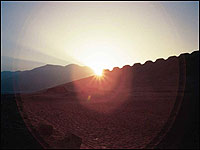
    This suggests the sun may have played an 
    important role in religious and political life 
    long before the appearance of the 
    famous Inca sun cult.
    Ivan Ghezzi is at the Catholic University of Peru and the national director of archeology.
     
    www.npr.org/templates/story/story.php?storyId=7658847&sc=emaf


    Punkurí: puma celeste en Chimbote http://www.terra.com.pe:95/turismo/patrimonio/arte65.shtml
    .
    Caraz
    www.ponyexpeditions.com Travel agent, tours, guides, bus, bike, accommodation, pizzas, supplies.
    www.bikeperu.com
    .
    Huaraz
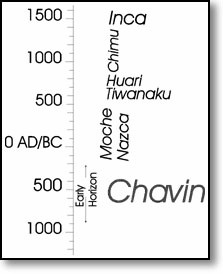
    Exploring Chavín de Huántar
    www.stanford.edu/~johnrick/chavin_wrap
    Prehistoric stone tools and weapons some 10,000 years old ... were found in the main square of  San Pedro de Chavin de Huantar
    Hallan restos arqueológicos de 10 mil años de antigüedad en Ancash 19/10/06

    (RPP Noticias) Un grupo de investigadores de la Universidad de Stanford, EEUU,

    descubrió restos arqueológicos de unos 10 mil años de antigüedad en la zona

    de Chavín de Huantar, en la provincia de Huari, en el departamento de Ancash.

    Los restos arqueológicos fueron hallados en el centro de la Plaza de Armas

    del distrito de  Chavín de Huantar donde se iba a levantar la infraestructura

    de un Centro Cívico para la Ciudad.

    El doctor John Rick, que dirigió el equipo de investigadores, presentó en el

    museo de Huaraz ceramios, cabezas clavas, caracolas y estructuras de placas

    pertenecientes a diferentes etapas y períodos como republicano,

    colonial y período arcaico de Chavín.

    http://www.rpp.com.pe/portada/nacional/52908_1.php


    Chavín La cultura. (Español)


    Chavin

    A new National Museum of Chavín is to be constructed in 2006 in the town of Chavín... Conservation of the Circular Plaza - Dr. John Rick, Stanford University ...
    www.globalheritagefund.org/where/chavin.html - 77k - Cached - Similar pages
    .


    1985 Chavin (Archaeological site) 
    1985
    Huascaran National Park 
    .
    www.huaraz.org/lacabana Popular Guest House
    .
    Huarmey: Punto Lobos
    HoustonChronicle.com - Peru finds evidence of mass seaside ...  Chimú sacrifices
    .
    Paramonga Lizardo Tavara (Español)
    .
    Norte Chico, Aspero, Bandurria & Caral
    Protege Perú Fotos de la Albufera del Medio Mundo, totorales, Caballitos y Caral.
    Barranca 
    Caral First City in the New World? 
    An introduction from Smithsonian magazine.
    PERU'S CARAL SUGGESTS CIVILIZATION EMERGED IN THEAMERICAS 1,000 YEARS EARLIER THAN EXPERTS BELIEVED

    www.caralperu.gob.pe
    Plan Maestro de Caral   www.larepublica.com.pe/noticia_cs.jsp?pId=11
    BBC - Horizon - The Lost Pyramids of Caral 

    CARETAS HOME PAGE ... Historial De CARAL

    Caral RDBoyd .

    Whitley Strieber's Unknown Country ... The Supe River Valley area of Peru, where Caral is located .

    The Field Museum Information: Press Room - [ Traduzca esta página ]
    ... CHICAGO – New radiocarbon dates indicate that the site of Caral (23 km east of Supe, & km 182 marker north
    of Lima, Peru) was home to the earliest known urban settlement .

    Field Museum anthropologists establish date and importance of the Americas' oldest city
    Radiocarbon dates of plant fibers indicate that Caral (120 miles north of Lima, Peru) was home to the earliest known urban settlement .

    Oldest evidence of city life in the Americas reported in Science , early urban planners ...
    The ancient Peruvian site of Caral may have been one of the first urban centers in the Americas, thriving more than a thousand years before other .

    Mesoweb Reports - Archaeologists have announced a secure date of 2627 BC for the earliest parts of
    the site of Caral in Peru. ... Caral was built before the domestication of grain. ... .

    Trip to Aspero – Caral: Discovering The Most Ancient Civilization of America

    La ciudad sagrada de Caral Supe - Indice
    INDICE. Formato .PDF. Introducción. Capítulo I. Contexto Geográfico e Histórico
    La Ubicación de Caral. Capítulo II. La Ciudad Sagrada de Caral. Capítulo III. ...
    sisbib.unmsm.edu.pe/bibvirtual/libros/Arqueología/ ciudad_sagrada/indice.htm - 6k -
    En caché - Páginas similares

    .
    Civilization lost? | csmonitor.com
    Caral, Peru has shattered the myth that civilization got a late start in
    the New World. Nearly 5000 years ago, people here in the ...
    www.csmonitor.com/2002/0103/p11s1-woam.html - 61k -
    Cached - Similar pages
    .

    CARETAS HOME PAGE - [ Translate this page ]
    ... finalmente, con inocultable orgullo, la doctora Ruth Shady, quien todos los fines
    de semana viaja a Caral para continuar un trabajo que pone al Perú ...
    www.caretas.com.pe/2001/1657/articulos/caral.phtml - 27k -
    Cached - Similar pages


    Aerófonos de Caral, Perú - [ Translate this page ]
    English Aerófonos de Caral, Perú. Los tubos más antiguos con un hoyo sonoro lateral
    y un tabique en su interior. Foto de las flautas de Caral. ...
    www.geocities.com/rvelaz.geo/caral/ecaral.html - 25k -
    Cached - Similar pages
     
    [PDF] LAS FLAUTAS DE CARAL-SUPE: APROXIMACIONES AL ESTUDIO ACUSTICO ...
    .

    GEO.de - Peru: Amerikas älteste Stadt entdeckt! - [ Translate this page ]

    ...

    Mesopotamien, Ägypten, Indien und China reiht sich nun zu Beginn des dritten Jahrtausends

    unversehens auch ein altamerikanischer Standort ein: Caral in Peru. ...
    www.geo.de/GEO/kultur_gesellschaft/geschichte/ 2001_11_GEO_aelteste_stadt_amerikas_index/?SDSID= -
    Similar pages


    .

    ... Descubren quipu con más de 4500 años de antigüedad en Caral ...
    de sus murales, los instrumentos musicales, sus elaborados textiles y
    adornos personales, la variedad genética de sus ...

    terraeantiqvae.blogia.com/2005/071602-peru.-descubren-quipu-con-mas... - 118k

    .

    Capacitan a mujeres de Caral en confecciones

    www.elcomercioperu.com.pe/EdicionImpresa/Html/2006-08-19/ImEcNacional0561604.html


    Caral on YouTube www.youtube.com/watch?v=P_VZ0_tNjsc&mode=related&search=


    En medio de ofrendas funerarias
    ENCUENTRAN RESTOS DE NIÑO DE 2 AÑOS EN CARAL
    Huellas de pies y manos que datan de hace aproximadamente cinco mil años encontró el equipo de arqueólogos

    del Proyecto Caral, sobre el piso de la también descubierta plaza circular “TinkuyMituKancha”, al norte de Lima.

    El anuncio lo hizo la arqueóloga, y responsable del Proyecto Especial Arqueológico Caral- Supe, Ruth Shady,

    dentro del marco de celebraciones por el décimo tercer aniversario de presentación de la civilización más antigua

    de América. Shady informó que además localizaron los restos de un infante, de aproximadamente dos años,

    adornado con cuencas cilíndricas de material orgánico y ofrendas de textiles quemados.

    www.tnews.com.pe/not_am/nm291007.htm


    CARAL Hallan subterráneos como los de Chavín Por TRAVEL UPDATE - 30/10/2007

    www.travelupdate.com.pe/detalles.asp?id=2947&gid=12&pg=1&sc=index.asp


    .

    Museo de Arqueología y Antropología
    Bibliografía y Hemerografía sobre la Ciudad Sagrada de Caral Supe .

    .
    .
    Bandurria (Incluye video de Caral)
    10 km al sur Huacho, frente a Playa Chica y la Albufera del Paraíso;
    ... llega por el desvío del km 141 C.Panam.N. por una trocha de 1.5km al
    oeste.
    http://guiasescapate.spaces.live.com/


    .
    ... caminos que habrían comunicado a Bandurria con Caral.
    La ciudad sagrada de Caral-Supe, ubicada unos ...
    trabajos ahora se centrarán en establecer los vínculos entre Bandurria y Caral ...

    www.clarin.com/diario/2005/12/03/um/m-01101283.htm - 24k -


    Bandurria iluminada 


    Este sábado 14 de Octubre, se iluminará por primera vez después de 5000 años,

    la ciudadela de Bandurria, ubicada a 10 kilómetros al sur de la ciudad de Huacho,

    emerge entre la arena y el mar, un asentamiento arqueológico, que presenta....

    Ver más


    Descubren sitio arqueológico de 4,800 años de antigüedad en Huaral
    Huaral, 06/11/06 (ANDINA).- Un grupo de especialistas descubrió el sitio arqueológico denominado Las Shicras,

    de unos 4,800 años de antigüedad, en el valle del río Chancay-Huaral, informó hoy la Fundación Museo Amano,

    que dirigió la investigación. [06/11/2006] http://www.andina.com.pe/NoticiaDetalle.aspx?id=103843

    Early Monumental Architecture on the Peruvian Coast 
    Evidence of Socio-Political Organization and the Variation in its Interpretation.
    © James Q. Jacobs
    , written in 2000.
    http://jqjacobs.net/andes/coast.html
    The New World's Oldest Calendar
     
    Research at a 4,200-year-old temple in Peru
     
    yields clues to an ancient people who may have
     
    clocked the heavens.
     
    By Anne Bolen


    Lima
    1988 Historic Centre of Lima 

    Más información sobre el Cápac Ñán Planes Maestros incluyen:

    Chan Chán , Centro Histórico de Lima, Proyecto Nasca , Proyecto Maras , Machu Picchu

    .
    logo-embajada.jpg (4123 bytes) It is recommended to register with your embassy.
    .
    Safe in Lima  Good information, flight bookings & economic accommodation in an attractive part of Lima. 
    .
    What do mummies eat?
    Trent University anthropologist reveals lifestyle clues of the ancient Inca of Peru
    Tue Nov 06, 2007 
    http://newsdurhamregion.com/news/life/article/88858
     

    Museo de Sitio de Puruchuco

    The site described in National Geographic in May 2002.

    Huaca Pucllana Translate
    El Parque Histórico Cultural Pucllana es resultado del afán científico por rescatar, conservar e investigar la Huaca Pucllana como uno de los monumentos más importantes de la ciudad de Lima. Incluye información arqueológica especializada.
    http://pucllana. perucultural.org.pe


    Pucllana on YouTube http://www.youtube.com/watch?v=3tTh1LGlmi8

     
    Notable hallazgo en Huaca Pucllana
    www.larepublica. com.pe/index.php?option=com_content&task=view&id=92107&Itemid=28&fecha_edicion=2005-10-19
     
    Pucllana  Lizardo Tavara (Español)

    Pachacamac  Lizardo Tavara (Español)

    Pachacamac official site & National Geographic in various languages

    March Resources @ National Geographic Magazine in 7 languages.

    ...

    Eeckhout, Peter. ... The dead are beginning to tell tales of the Function of Pyramids With Ramps at Pachacamac, Central Coast of Peru. ... First settled around A.D. 200, enduring and even thriving under various cultures for some 1,300 years. magma.nationalgeographic.com/ ngm/0503/resources_cre.html - 19k - Cached - Similar pages

    Con el cielo en los muros Pachacamac y otros

    Alfio Pinasco, experto en arquitectura arqueológica y arqueoastronomía, comprueba analogías

    www.elcomercio.com.pe/edicionimpresa/Html/2007-08-05/imeccronicas0765288.html

    .
    Lima is good for Museums 
    Peru MuseumsCurrent Exhibition 

    The Colonial Andes: Tapestries and Silverwork, 1530–1830
    September 29, 2004–December 12, 2004

    Exponen en España piezas antiguas del Museo del Oro del Perú Murcia, nov. 07 (ANDINA).-

    Más de 80 piezas precolombinas, pertenecientes al Museo del oro del Perú,

    fueron presentadas hoy en el museo de Bellas Artes de Murcia, en el sureste de España,

    en una exposición que estará abierta al público hasta los primeros días de enero del 2007.
    http://www.andina.com.pe/NoticiaDetalle.aspx?id=103960

    The Spirit of Ancient Peru in San Francisco & Knoxville USA: www.tribalarts.com/feature/peru/index.html 
    Latin Trade: Fool's gold - Trade Talk - [ Traduzca esta página ] 
    Attendance at the privately owned museum in Lima remained strong in the final months of 2001 after an investigation by consumer protection agency Indecopi ... Not the Gold Museum
    www.findarticles.com/p/articles/mi_m0BEK/is_2_10/ai_82801229 - 26k -
    World  Museums (En español)
    Instituto Latinoamericano de Museos Includes list of World Heritage cultural & natural sites in Latin America.
    www.ilam.org/pe/pe.html
    Huaca Malena
    102km South of Lima. Good links to other museums, sites etc:
    http://huacamalena.perucultural.org.pe/enlaces.htm
     
    Mágica ruta sur Lima Ica Arequipa

    www.larepublica.com.pe/index.php?option=com_content&task=view&id=152254&Itemid=0
    Ciudades de la mágica ruta sur www.perutravelmart.com.pe/spa/pto11_ciudades.htm#
    Reserva Nacional de Paracas Plan Maestro 2003 – 2007

    www.inrena.gob.pe/dganp/planes/rnparacas/plan%20maestro%20RNP%202003-2007.pdf

    www.geocities.com/proyectonasca/museo.htm Museo Antonini
    .
    Nasca Centro Italiano Studi e Richerche Archeologiche Precolombiane
    .
    1994  Lines and Geoglyphs of Nasca and Pampas de Jumana 

    Ancient iron ore mine discovered in Peru

    A 2,000-year-old mine has been found in Peru, offering proof that an ancient Andean people mined iron ore long before the Inca, experts say.

    http://news.nationalgeographic.com/news/2008/02/080211-nasca-mine.html?email=Places15Feb08

    Más información sobre el Cápac Ñán Plan Maestros incluyen:

    Chan Chán , Centro Histórico de Lima, Proyecto Nasca , Proyecto Maras , Machu Picchu


    .
    Cahuachi www.ctncpac.com/atos/posts/920.html
    .
    Cahuachi archaeological ceremonial center to open to tourismwww.peru.org.pe/perueng.asp?notic=5.
    www.nazca.net  Nazca, Moche, etc.
    .
    Puerto Inca Lizardo Tavara (Español)
    Arequipa
    2000 Historical Centre of the City of Arequipa

    Viva la tradición alpaquera (Translate this page Alpacas & bus tour in Spanish)

    www.elcomercioperu.com.pe/EdicionImpresa/Html/2007-06-12/Vamos0737528.html

    Colonial Tours, Santa Catalina 106, Arequipa. Telefax 054 286868.
    .
    Cuzco
    1983 City of Cuzco 
    1983 Historic Sanctuary of Machu Picchu
    1987 Manu National Park 
    www.atalantequechua.com/indexi.htm Trek, climb, 4 x 4, jungle, raft, & classic adventures from Cuzco.
    www.aventuraquechua.com/  Trek, climb, 4 x 4, jungle, raft, & classic adventures from Cuzco.
    www.instinct-travel.com Land of the Incas Tour Operator
    Search Tuna Report for Machu Picchu 
     
    Choquequirau- The Other Machu Picchu New York Times 3rd June 2007
     
    The lost city of Choquequirao Rumbos translated on Living in Peru.
     
    Choquesuysuy Rumbos translated on Living in Peru.
     
    Holes in ancient skulls reflect skilled medical care
     

    Más información sobre el Cápac Ñán Plan Maestros incluyen:

    Chan Chán , Centro Histórico de Lima, Proyecto Nasca , Proyecto Maras , Machu Picchu


    Plan Maestro de Machu Picchu:

     Falta de drenaje y control amenazan la ciudadela inca
    www.elcomercioperu.com.pe/EdicionImpresa/Html/2005-03-13/ImpTemaDia0273012.html
    consumer.es ::: Un equipo de arqueólogos descubre restos de una ...antigua civilización en el lago Titicaca ... 25 diciembre 2004 ...Han hallado un ídolo de oro de más de 30kgs...www.consumer.es/web/es/noticias/ educacion_y_ciencia/2004/08/23/107704.php - 51k - En caché - Páginas similares  Descubren misteriosa civilización en el fondo del lago Titicaca ...
    donde se presume se hacían sacrificios humanos, pero que con el paso del tiempo
    quedó sumergida a más de 100 metros ... 25 de Diciembre del 2004 ...
    www.aclantis.net/article7175.html - 42k -
    En caché - Páginas similares


    Peru archeologists find Inca temple in Andes
    www.ruta-inka.org

    Más información sobre el Cápac Ñán Plan Maestros incluyen:

    Plan Maestro, Proyecto Nasca, Proyecto Maras, Machu Picchu, Chan Chán,

    Centro Histórico de Lima.

    www.inc.gob.pe/proy7.shtml

    Ancient Inca Road in Desperate Need of Protection

    A preliminary study of the ancient highland road that linked the Inca Empire from

    southern Colombia to Central Chile, found that only 5 percent of the 8,500 km route

    is under some form of protection, and large sections of it have been lost entirely.

    www.eurekalert.org/pub_releases/2003-09/ci-air090903.php

    PROPUESTA; PEREGRINAJE POR EL QHAPAQ ÑAN:
    QUITO-CUSCO; POTOSI-CUSCO

    March along complete Inca Trail

    www.quechuanetwork.org/wiraqochanan.cfm?yanantin=yachay_14&lang=s

    www.quechuanetwork.org/yachaywasi/Qhapaq_Nan_Ruta_de_Sabiduria.doc

    La Cámara Regional de Turismo


    Amazon River Cruise
     
    Iquitos-Peru.com

    Were The Shang And The Inca Really Frisian/Magyar?
    ... The Inca were a white race, as we were told by Columbus, Pizarro, and Garcilaso
    ... In 1978 Michael Heltzer published his study of tablets from Ugarit. ...
    all-ez.com/frisian-inka.htm - 86k - 19 Feb 2005 -
    Cached - Similar pages


    Oldest Skeleton in Americas Found in Underwater Cave?

    http://news. nationalgeograph ic.com/news/ 2008/09/080903- oldest-skeletons .html


    Americas 'settled in three waves' 12/7/2012
    http://www.bbc.co.uk/news/science-environment-18770963


    First Humans To Settle Americas Came From Europe,

    Not From Asia Over Bering Strait Land-ice Bridge, New Research Suggests

    ScienceDaily (July 17, 2008) — Research by a Valparaiso University geography professor and his students

    on the creation of Kankakee Sand Islands of Northwest Indiana is lending support to evidence that the

    first humans to settle the Americas came from Europe, a discovery that overturns decades of classroom

    lessons that nomadic tribes from Asia crossed a Bering Strait land-ice bridge.

    www.sciencedaily.com/releases/2008/07/080701193203.htm


    Native American History

    All across the Americas, archaeologists and anthropologists, along with geneticists,

    linguists, geologists, and some of America's native peoples, are assembling new data,

    reassessing older data, and generating new models that call into question both the

    single genetic and cultural origin model as well as the Clovis First model.

    And the answers now emerging to the questions of who were the First Americans,

    from where did they come, how did they get to the Americas, when did they arrive in

    the Americas, and what were their lifeways during initial colonization are very

    different from those of just a few years ago and suggest a picture very different

    from the standard textbook story of who the first Americans were.

    www.cabrillo.edu/~crsmith/anth7_hist1.html

     
    Hallan rastros humanos de hace 13.000 años en norte de Chile  
     
    ¿El primer asentamiento humano de América , en el sur de Chile? 
    Dos arqueólogos estadounidenses reconocieron 
    que los grupos Clovis puede que no fueran la
    primera cultura del continente americano.
    Esto abriría las puertas al yacimiento de
    Monte Verde, en el sur de Chile, como el
    primer asentamiento humano de América...
    Refutaron la teoría de que EEUU fue el
    primer lugar habitado del continente.
    Stafford y Waters indican en su estudio que
    una reevaluación de la datación y de los
    registros establece que la antigüedad de Clovis
    fue en realidad de 11.050 y 10.800 años...
    Esta señala que los primeros hombres que
    poblaron el continente llegaron desde las islas
    de la Polinesia, a través del Pacífico 
    http://www.diariode cuyo.com. ar/home/new_ noticia.php? noticia_id= 207369
     
    Indian DNA links to 6 'founding mothers
    Americas Settled 15,000 Years Ago, Study Says


    Photo: First "America" Map Mystery
    A 500-year-old map that makes the first known reference to "America" has some researchers puzzled as to how the mapmaker sketched out the world.

    http://newsletters.nationalgeographic.com/WBRH016B5C78D4C59CCFD379FB6650


    Siberian, Native American Languages Linked -- A First

    John Roach for National Geographic News March 26, 2008

    A fast-dying language in remote central Siberia shares a mother tongue with dozens

    of Native American languages spoken thousands of miles away, new research confirms.

    http://news.nationalgeographic.com/news/2008/03/080326-language-link.html


    Ancient Beachcombers May Have Travelled Slowly

    Earliest known human settlement in the Americas raises new questions
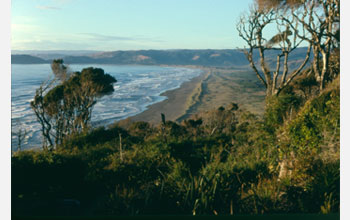
    Photo of the Chilean coastline.

    Chilean coastline and inland food samples raise questions about how migrants populated the Americas.
    Credit and Larger Version

    May 8, 2008

    New evidence, more questions. That's the thumbnail of the first new data reported in 10 years from Monte Verde, the earliest known human settlement in the Americas.

    Evidence from the archaeological site in southern Chile confirms Monte Verde is the Americas earliest known settlement and is consistent with the idea that early human migration occurred along the Pacific Coast more than 14,000 years ago, but questions remain about just how rapidly that migration occurred.


    Please see the next 5 by clicking on extreme right >>>